The second half of the ride
Saturday, June 10th: Late morning on Day 7, about Day 6 and today so far


It’s 11am on our rest and recovery day. We are again on the Kherlin River, now in dry steppe, almost desert. Still in Henty Province. Yesterday we continued across broad flat plains dotted with burrows, then crossed a mountain range into this dry area. We have now come somewhat south and are nearing the Gobi.
I slept much of the way in the bus yesterday, sprawled out across the tops of the expedition boxes with my head resting on somebody’s stuffed sleeping bag. It hurt to sit, and I was totally depleted. We met the riders for lunch. They said the morning ride had been unbelievably hot; they drenched their heads with water to cool off. The crew presented each with an ice cream cone they had picked up at a town along the way. Julia decided to sit the afternoon out in one of the vehicles, thanks to the UTI.
The buses and snoozing me arrived at the camp spot mid-afternoon. Saraa kindly set up my tent right away, just feet from the Kherlin. A herd of camels grazed in the brush across the river. It was hot. I hiked upstream a bit, plunged into the cold river, and soaked my aching body. It was delightful. I spent the afternoon reorganizing my expedition boxes, choosing the bits of dirty laundry to wash that will get me through the rest of the ride, and napping in a sarong, mentally encouraging my bum to heal.
The herd of loose horses arrived first, driven by Khlauga. The riders and guides arrived around 7:30pm. Tanya said progress had been awfully slow, much of the ride at a walk thanks to burrows and the heat. I was sad to have missed it but also glad to have been spared the grind of a slow walk. I sat with Cele on an expedition box next to the river and drank wine while Tanya had a dip; she treated us to a view of the bruise on her hip, which is as big as a cantaloupe. Her back is hurting. Dinner was spaghetti with meat sauce and was fabulous, boxed wine, beer made cold in the river, and vodka on the side. There was no wind and it was a beautiful evening; we sat outside until after nightfall.

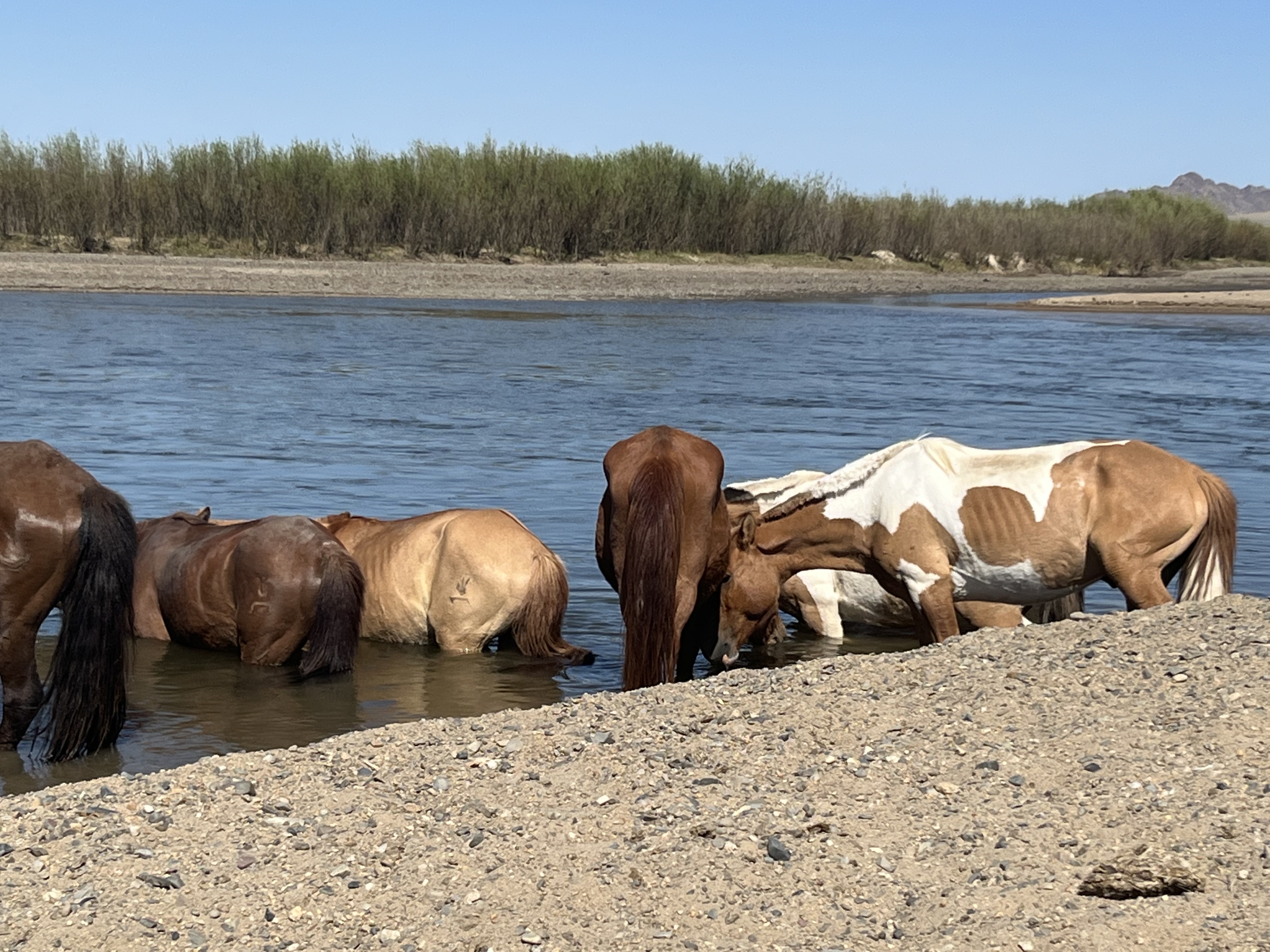
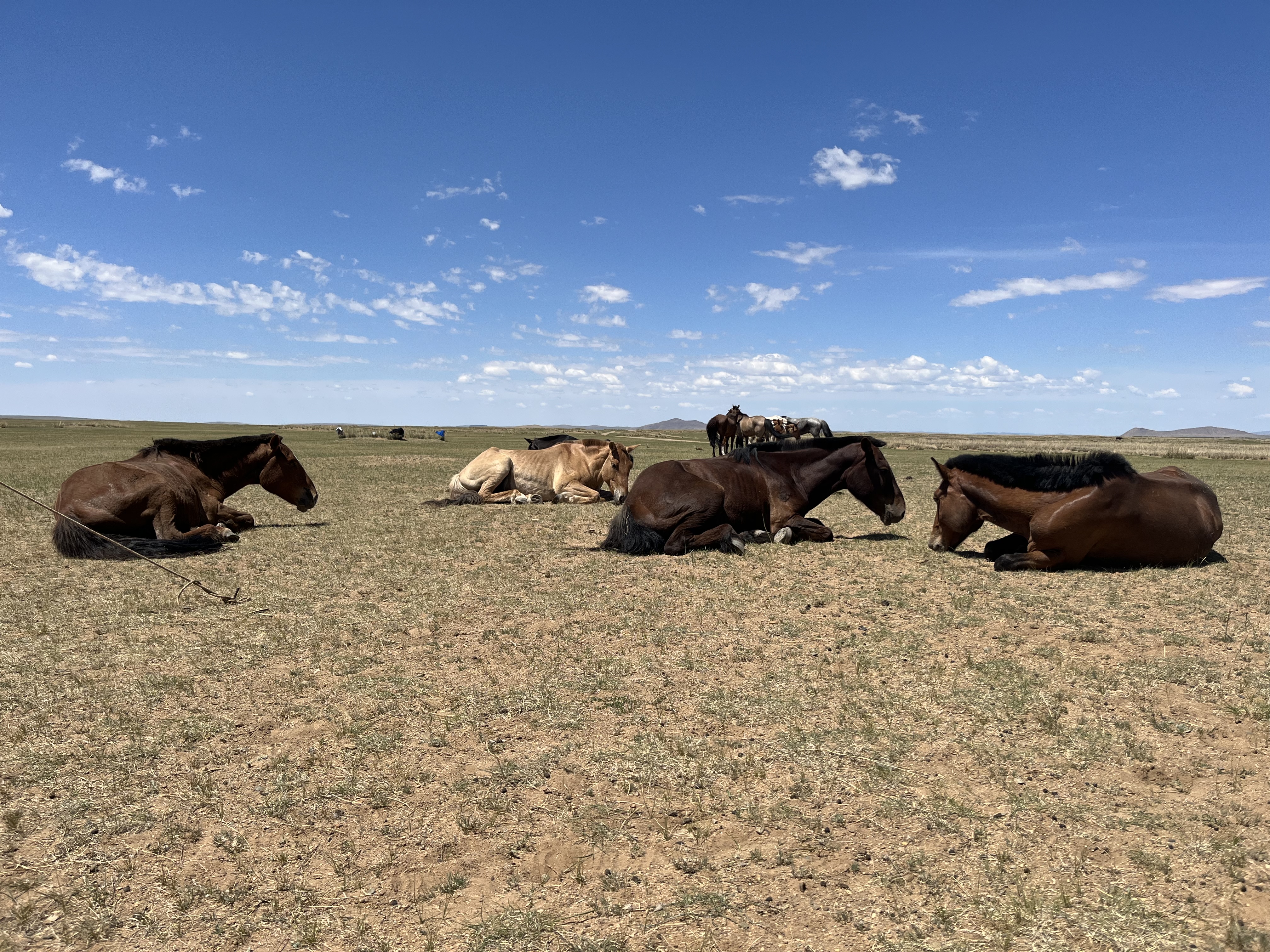
I slept well and none of us were up before 7:30. I had a freezing morning dip in the Kherlin. Breakfast was omelettes with glorious bacon bits Julie had brought from Canada, penne noodles, and sliced cucumbers and tomatoes. (By now you are expecting these interesting combinations, right?) Then, some more laundry, a bit of writing, another dip in the river, more writing.
We have come over about 400 kilometers. This is an incredible adventure with a group of amazing and very tough women. I’m not sure I’m quite as tough as they are, but I’m enjoying their company and, I hope, channeling their fabulousness.
Sunday, June 11th: End of Day 8
Yesterday’s rest day was terrific. I wrote in this journal and dipped in the river a gazillion times. Many of us slept on and off all day. I devoted much of the day to my buttocks. All of the other riders had suggestions about how to best cure my chafe. Julie said to soak in the river as often as possible. Cele said to slather zinc oxide on it. Tanya promoted treatment with an herbal moisturizer. Sara Beck had a different opinion: I grew up on a cattle station with no doctor. I tell you, doll, wipe it with alcohol swabs. That’ll do the trick. It’s certain to work, though it’ll make you scream. Then wear nylons to ride under your riding tights. (She gave me a new pair of nylons.) Doctor Suke said to slather it with antibiotic cream. Someone else urged copious lube use for all future riding.
I ended up employing every single one of these techniques. I also spent the day snoozing and studying from a ridiculous 10 pound study guide for the nursing licensing exam that I hauled along on this trip. Things improved moderately.
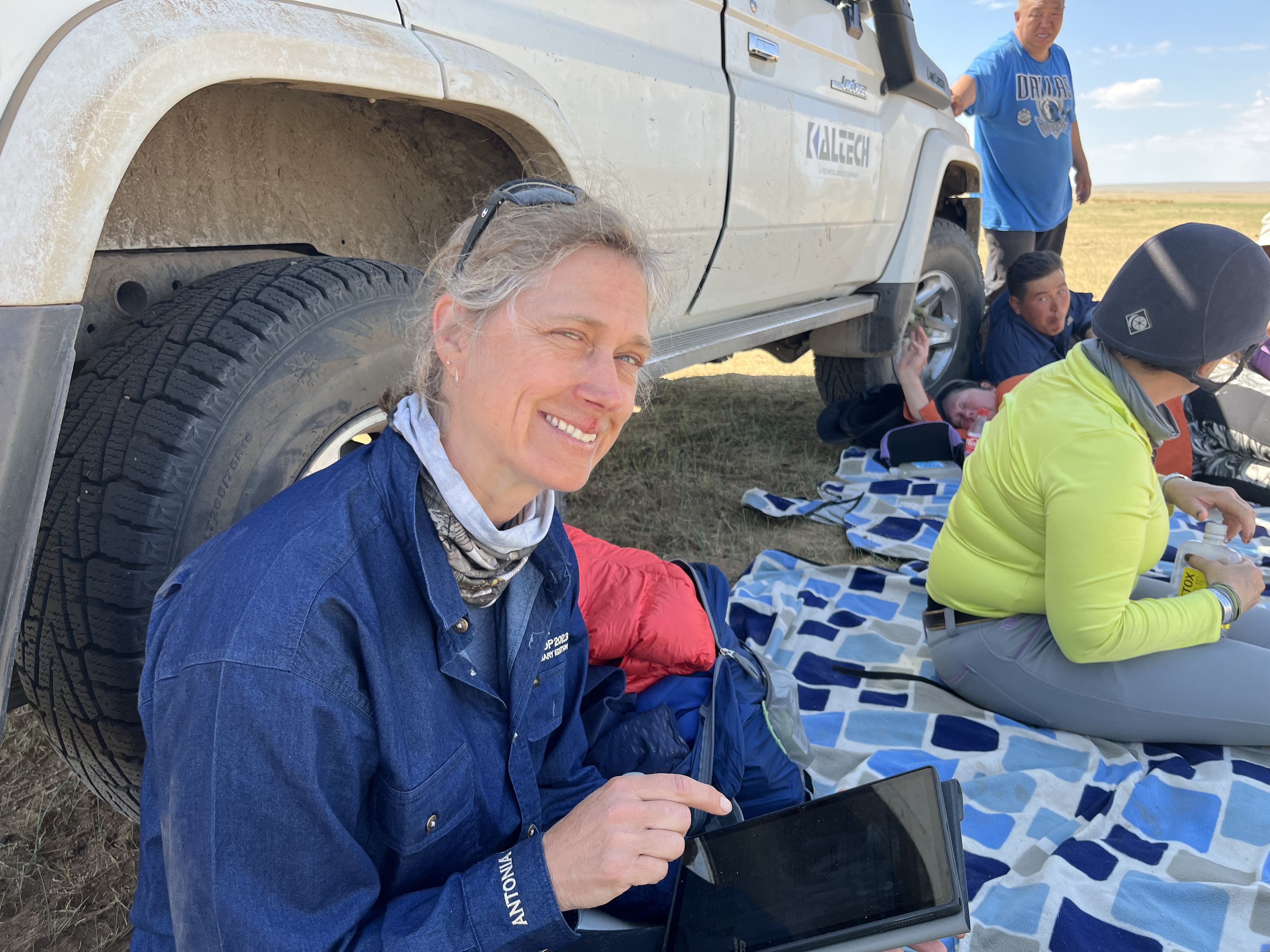
This morning we left early to avoid the heat. Before we took off, I slathered with all of the recommended ointments at the same time, hoping for the best. We left at 6:30 am and had ridden 15 km by 7:45. By 9 am with had done 30 km. We had a break near a gigantic flock of sheep. We happened to have signal, and I sat with a tablet in the middle of nowhere Mongolia and registered to take my nursing licensing exam. Hard to remember I ever went to nursing school. Our odd days and even days are now thrown off by the rest day. I was not on Irgh, or Odd Day Horse, whom I really like, but rather was on one on my previous even day horses. He’s a good guy, but I don’t like him as much as Irgh. His gears aren’t adjusted the same as the leader’s horse, so I either have to push him or hold him back, usually the former. But we chugged along and did ok, with me mostly standing in the stirrups to protect my bum.
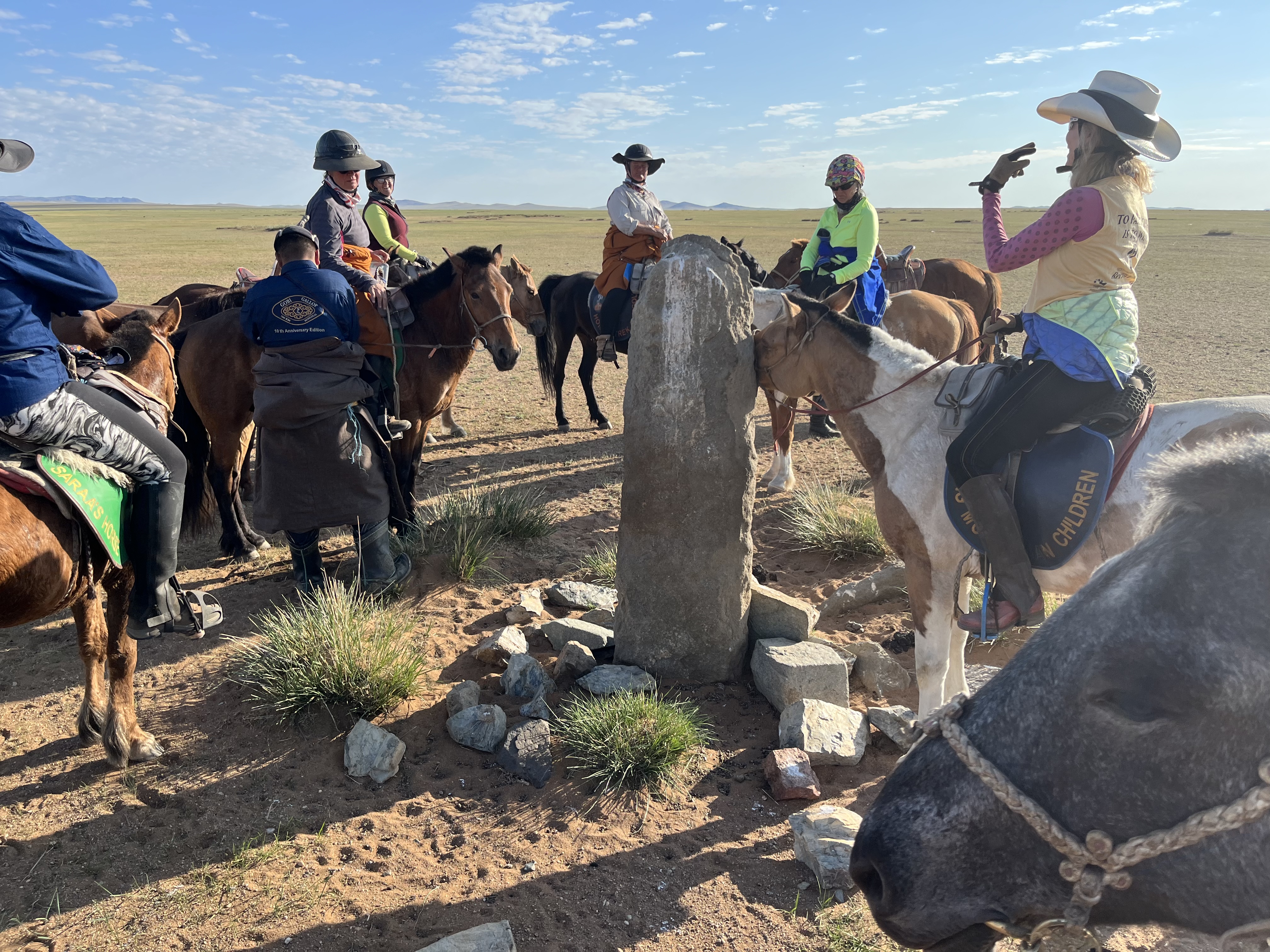
At some point we stopped at tall stone pillar that had been stood in the ground by Ghengis Khan a thousand years ago. It’s a tie pole, which he used to tether foals while their dams were being milked. Apparently there are many of these across the landscape. The huge stone must have been brought from far away in the mountains somewhere – there was nothing like it anywhere around.
At another point Sara’s horse’s front hooves went through the ground, probably into a burrow. He came down on his nose. Sara calmly pulled him up out of the ground, barely missing a stride. All the riders complimented her for staying on and handling it so well. She’s a fabulous rider. Four minutes later my horse did a slightly less dramatic version of the same. I stayed on as well and felt good.
We had lunch at 40 km. Most of the riders snoozed after eating. It got really hot. We doused our shirts and scarves in cold water before taking off again. We passed through the transitional steppe zone into the northern Gobi Desert, trotting over sand and through increasingly sparse vegetation. When we thought we had about 10 km to go, I was exhausted. I wasn’t the only one. 17 km later, at a total of 77 km for the day (or 48 miles), we finally reached the yellow buses and our yellow tents, already set up.
We have agreed that these days are like having babies. They are both exhilarating and excruciating. In the last stretches of the ride / delivery, you want to kill everybody around you and you swear you will never have a baby / ride again. Then, you reach camp, swim in the river, put on fresh(ish) clothes, squeeze out a glass of wine from the box, and feel ready to push out another baby / 70 km tomorrow.
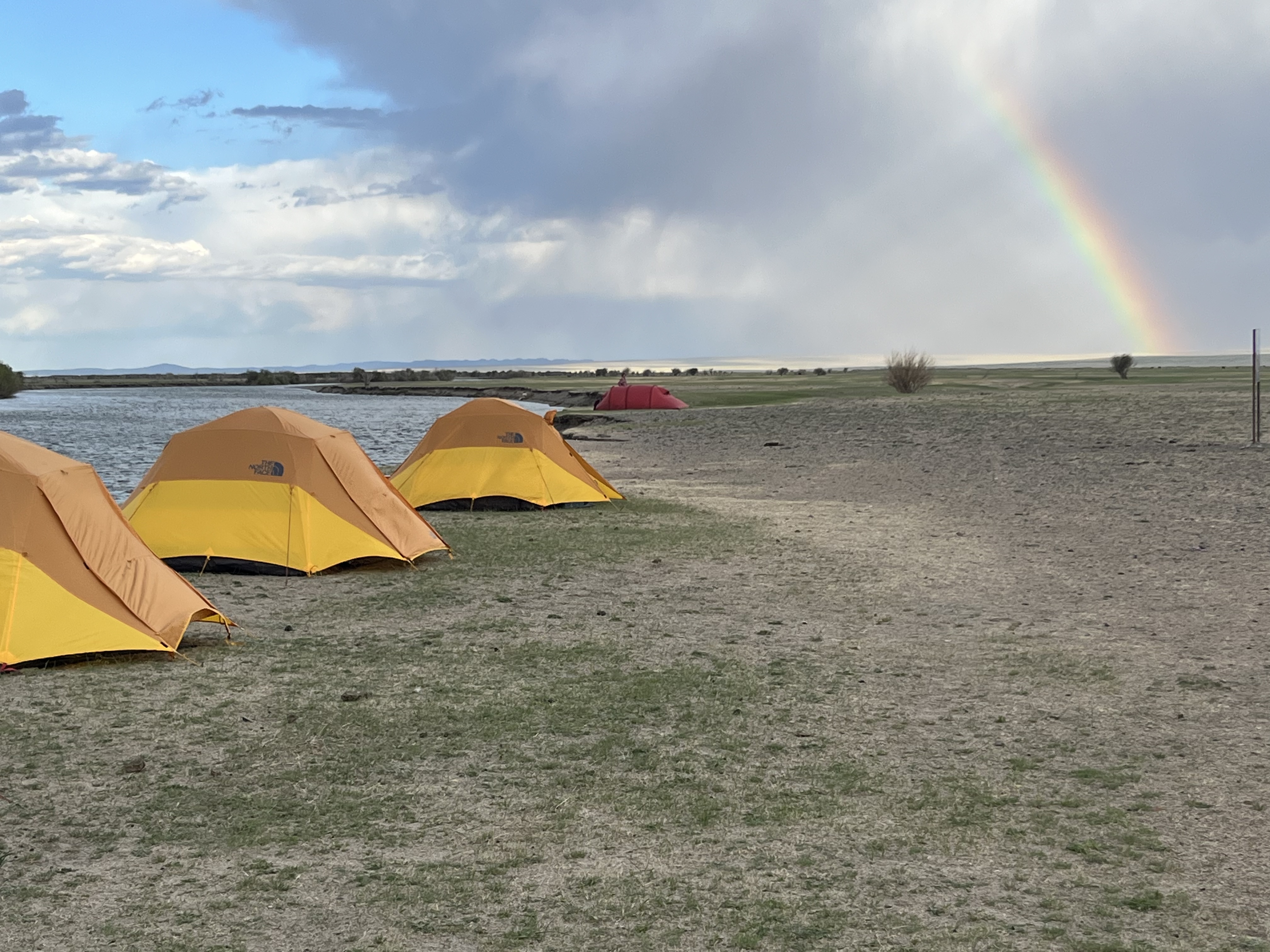
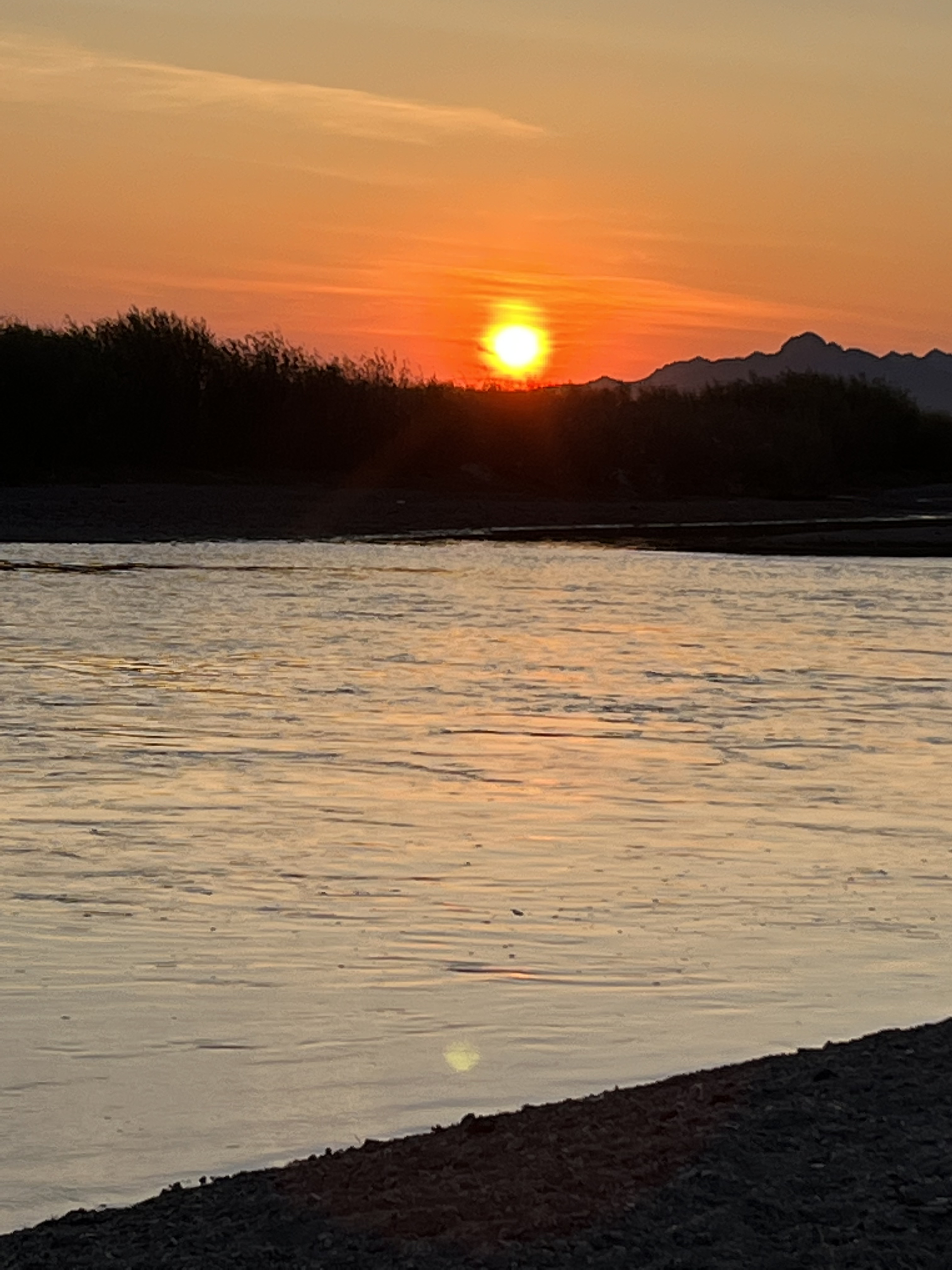
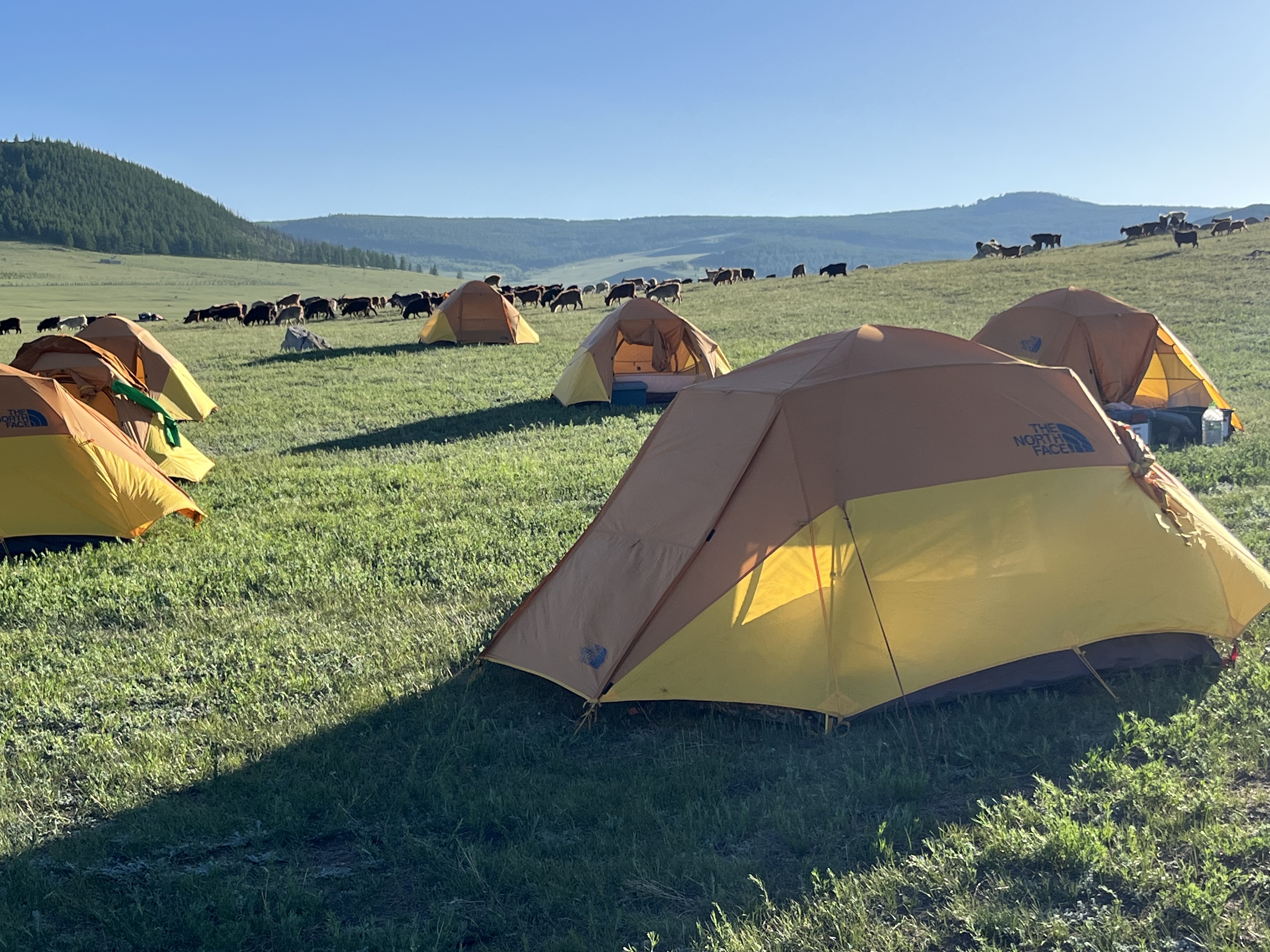
We are camped in a beautiful spot. Sand, sparse vegetation, dessert hills. Again on the fast-moving Kherlin River, in which I bathed after we arrived in camp. We could see storms in the sky to both the east and west, but they did not reach us. We were treated to a rainbow. We ate dinner and drank wine outside while the horses fed from grain bags and rolled in the sand. The herdsmen engaged in an intense card game; Julie says their games are impossibly complicated.

A highlight of today: translated via Julie, Khlauga said today that when I come to be his assistant, I should first lose about 10 kilos before coming so the horse can carry me more easily. Then he will take me for a 150 km training ride during which there will be zero stops. I’m not sure I’m up to all of this. Haven’t signed a contract yet.
Monday, June 12th: End of Day 9
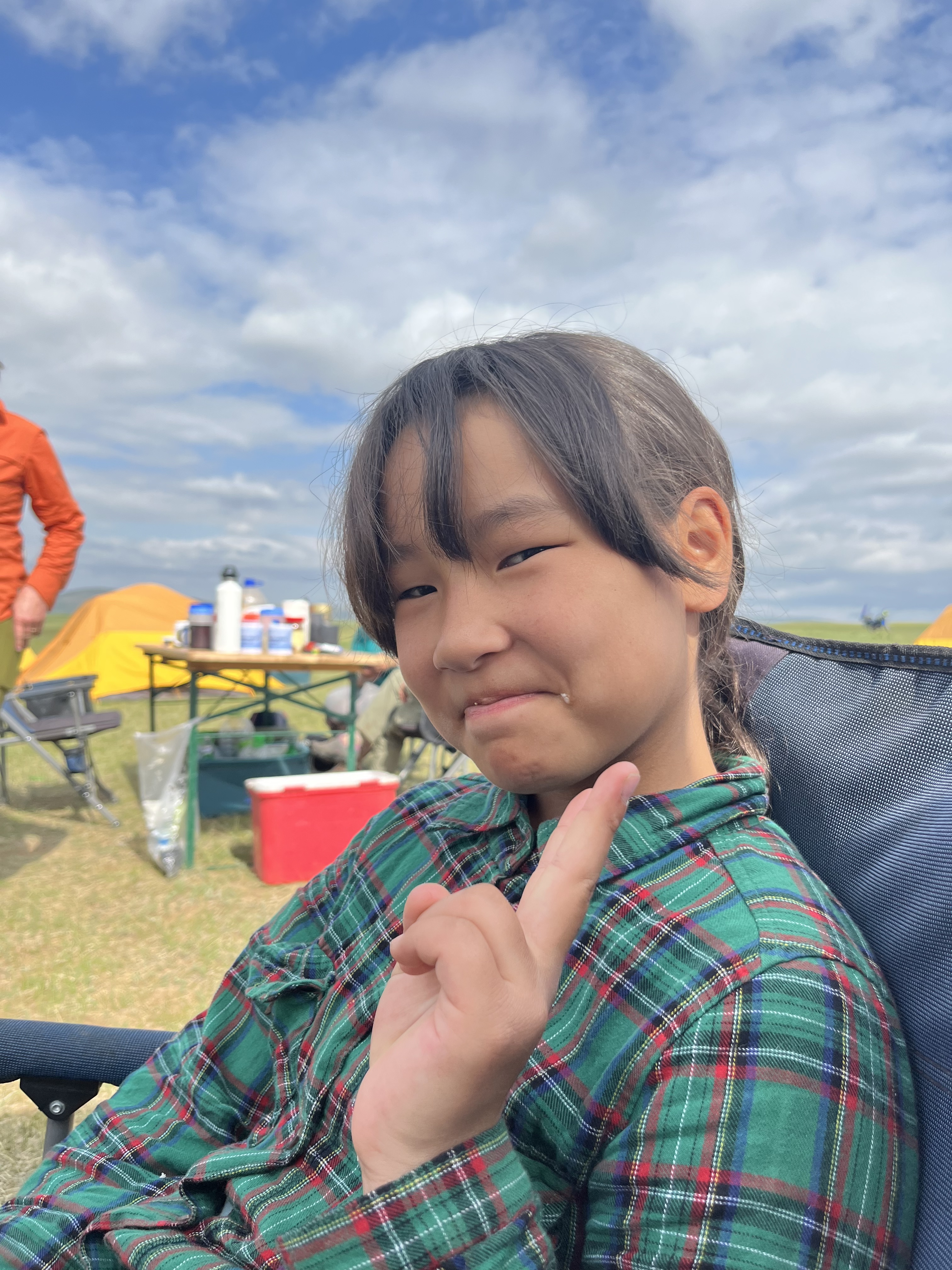
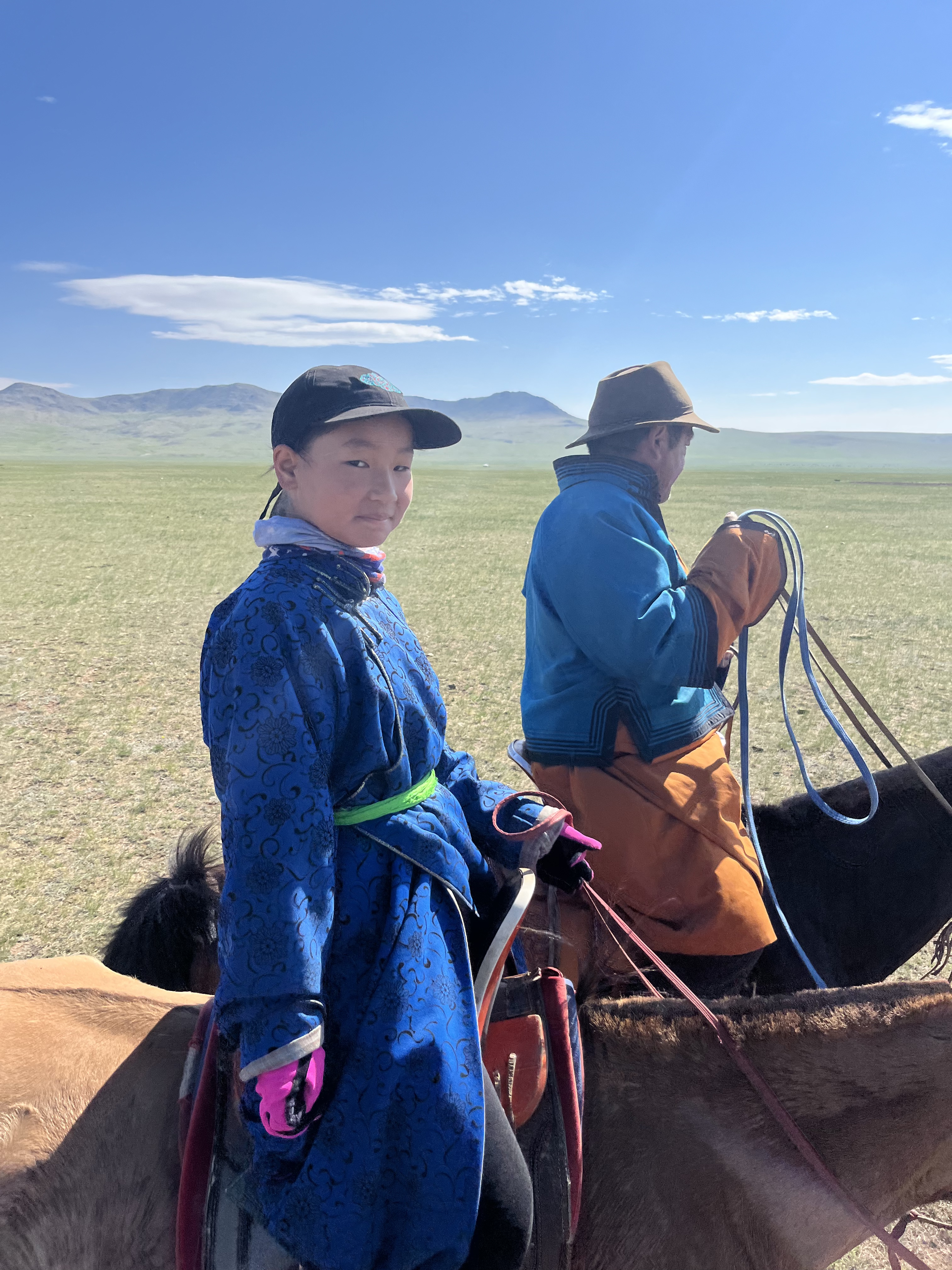
Exhausted. Absolutely exhausted. It was hot today, again. We started early after a strange breakfast that included something Julie described as “lecho sushi” (I stuck with bread and a pastry) and had done 17 km by our first break a little after 8am, 30 km by the next break before 10 am, and 45 km by lunch. We traveled through gently rolling hills, mile after mile, with only spare short grass on the ground and the occasional clump of longer grass whose blades looked like porcupine quills. We saw a yellow fox (the Corsac fox) dart across the landscape in a zigzag fashion that gave us a good view for a minute or so. A herd of Mongolian gazelle crossed our paths. We wet our clothing at breaks against the heat; it dried in 20 minutes. We galloped for miles and miles. I was on a new horse, one whom Saigna says would be his race horse of choice. He did like to go and clearly enjoyed the long gallops. Dolma, the nine-year old sister of the little boy who rode a bit with us at the beginning of the trip, joined us today for the second time. She hasn’t ridden much before. Bagi has her on a lead line for a short while at the start, and then he releases her and gallops off into the distance. Trial by fire. Of course, she’s perfectly fine. She jiggles along in the saddle like she’s been doing this for thousands of years, which, really, she has. Her pony tails bounce away and she’s happy as a clam. She put away the first 40 km with us with a smile on her face and a knuckle bump for anyone riding by her side.
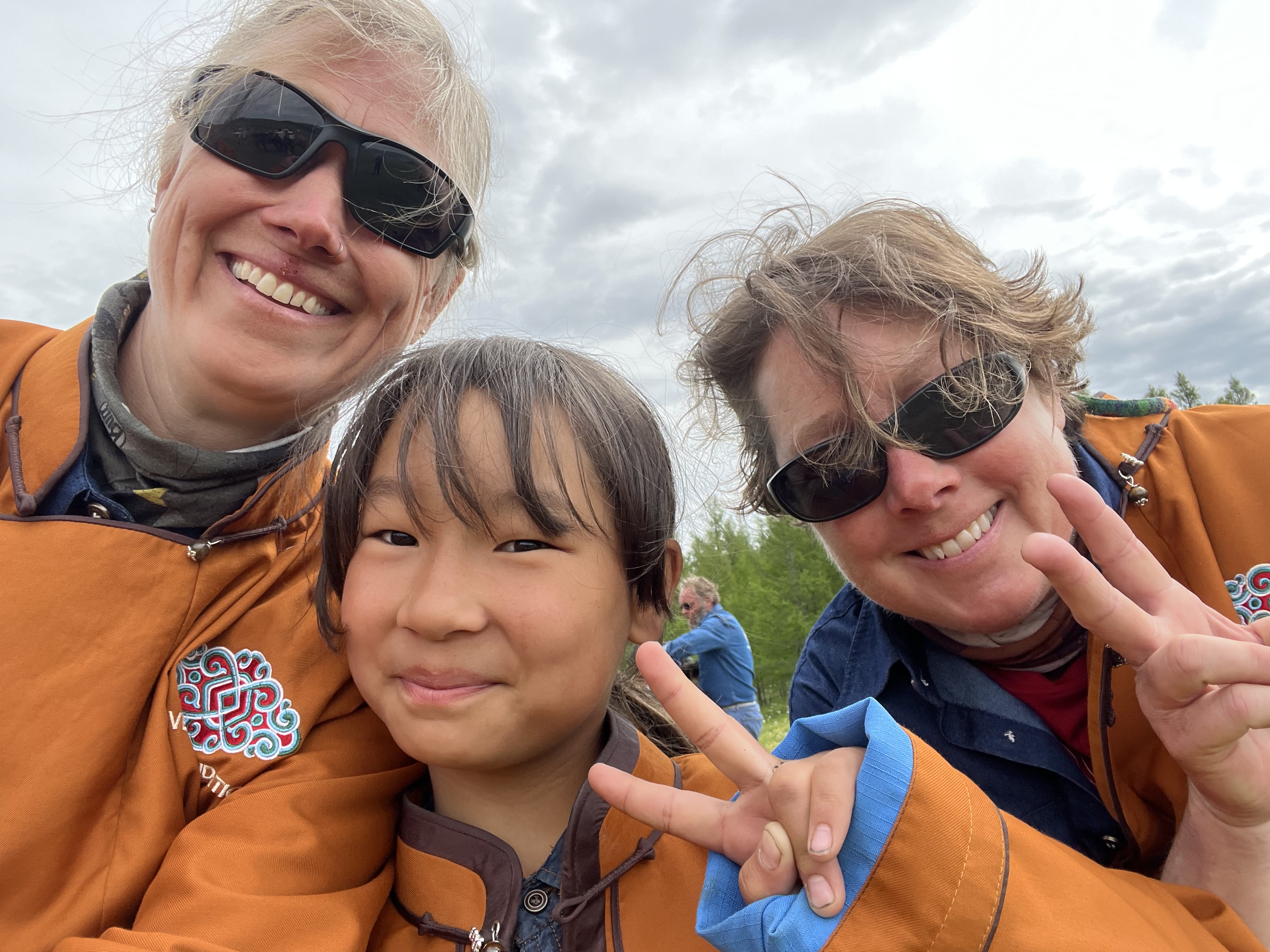
At lunch we all slept in the shade of the buses, some of us actually under the buses, a deep, snoring sleep. Lunch was more or less mutton goulash. It was very, very hot at lunch. We expected that Bagi would lead us at a slower pace when we went on. That was not really so. We rode through more dessert and saw hamsters and little birds (Wheatears) that live in rodent burrows. At one point we rode through miles of prairie that had strange granite rocks poking up from the sparse grass. Things were much, much less painful today, but the last 10 km was still torture. We reached the camp, where it is hot and sunny, around 5.
Thankfully there was cold (lukewarm) beer waiting for us. The motorcycle guys had picked it up, along with another bottle of vodka. The motorcycle guys? This year Julie is vetting another kind of fundraising ride – the Steel Horse Gallop. An Irish medic and two Mongolian guys are riding our route plus some. They started after us; we met up on Day 4 and have lunch together and camp in the same site. Julie devised the idea after having many female riders whose husbands don’t ride horses but do ride motorcycles. There are no couples on this trip, but perhaps in the future. It’s been entertaining to meet the three bikers. One of the Mongolian guys (Soyolbold) speaks excellent English and is a wildlife photographer. The other (Zola) is another son of Bagi, Saigna’s brother. The beer was welcomed. There is no river here, just a well. I bathed by dumping water over my head from a big jug. It was critical.
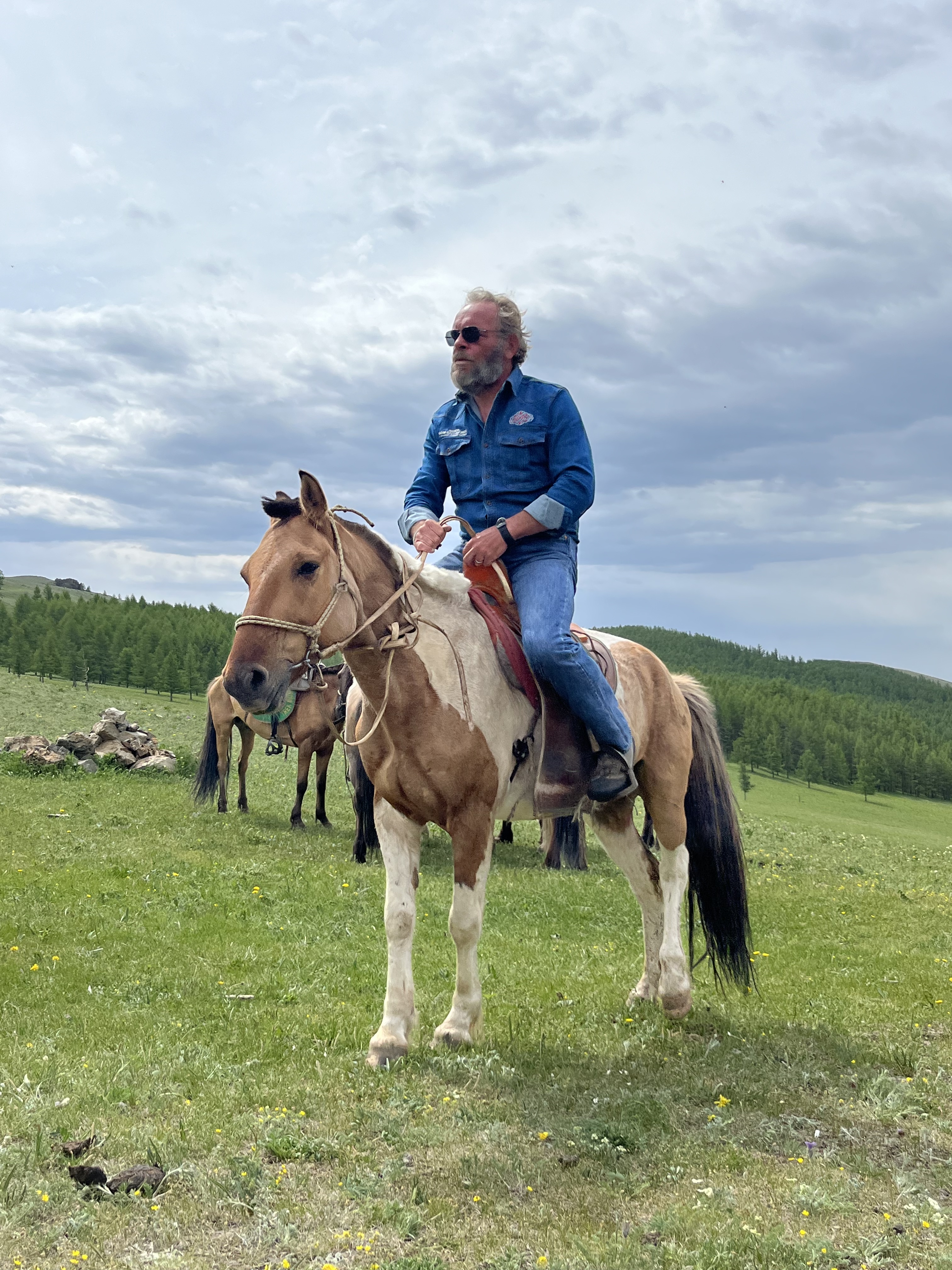
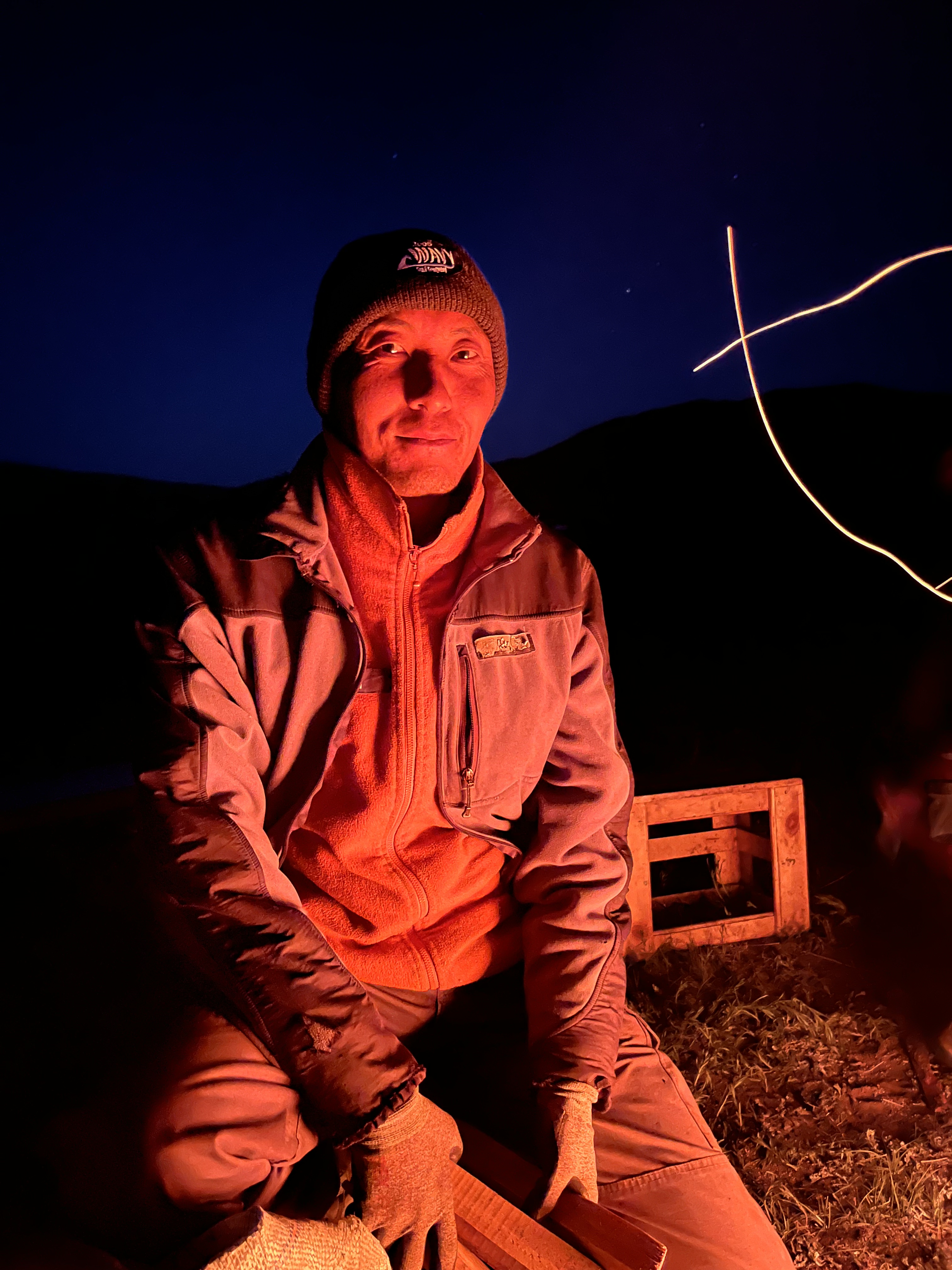
Dinner was spaghetti with a vegetable sauce that included pickles. Hard to believe, I know, but it was phenomenal. It is possible that my inability to make up the calories I’m burning every day is contributing to my taste for these meals, but I’m not complaining.
We have 158 km left to ride, two big days, which we now call “babies to be delivered”, plus just a smidge on the final day. To bed…
Wednesday, June 14th: Start of Day 11, about Day 10
It’s 7:05 am and I’m still in my sleeping bag. Yesterday we earned a late start this morning – really, REALLY earned it.
We had ridden 30 km by 10 am, mostly through dessert – sandy soils and short, sparse grass. It was hot and windy. I was on a horse we had named Fabio, as he was ridiculously handsome with a thick foot and a half long mane when we first picked him up from Khlauga’s herd a few days ago. (The herders promptly shaved it off – too hot for that kind of mane). Fabio has clearly been around the block before and might be sort on the lazy side. He was a lot of work and took a lot of pushing to keep him on pace. Also, he wasn’t much interested in cantering, and it’s exhausting not to get a break from trotting now and then…unless you’re a Mongolian herder. At our second morning rest break (after 30 km), We decided to finish 50 before the long lunch break. We were looking forward to that, as it would make the afternoon part of the ride, when it is hotter and everyone is already tired, even shorter. We hammered out another 10 km. At one point we stopped so the men could untangle the leg of a horse that was tethered to a yearling. (Saigna explained that sometimes herders will tether a horse that is new to a herd to one that is a part of the herd until the new horse has become assimilated.) We passed back into Tov Province.
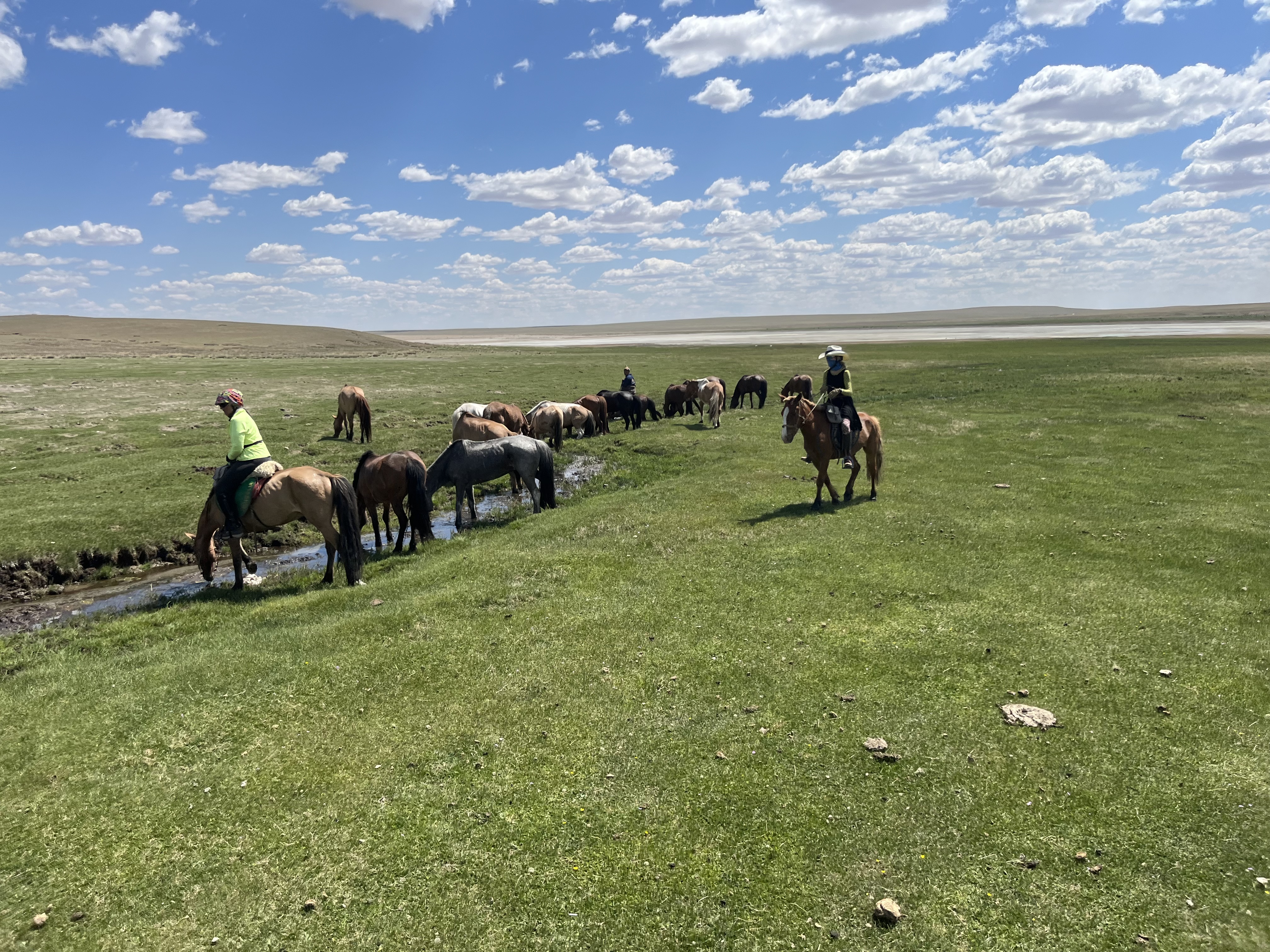
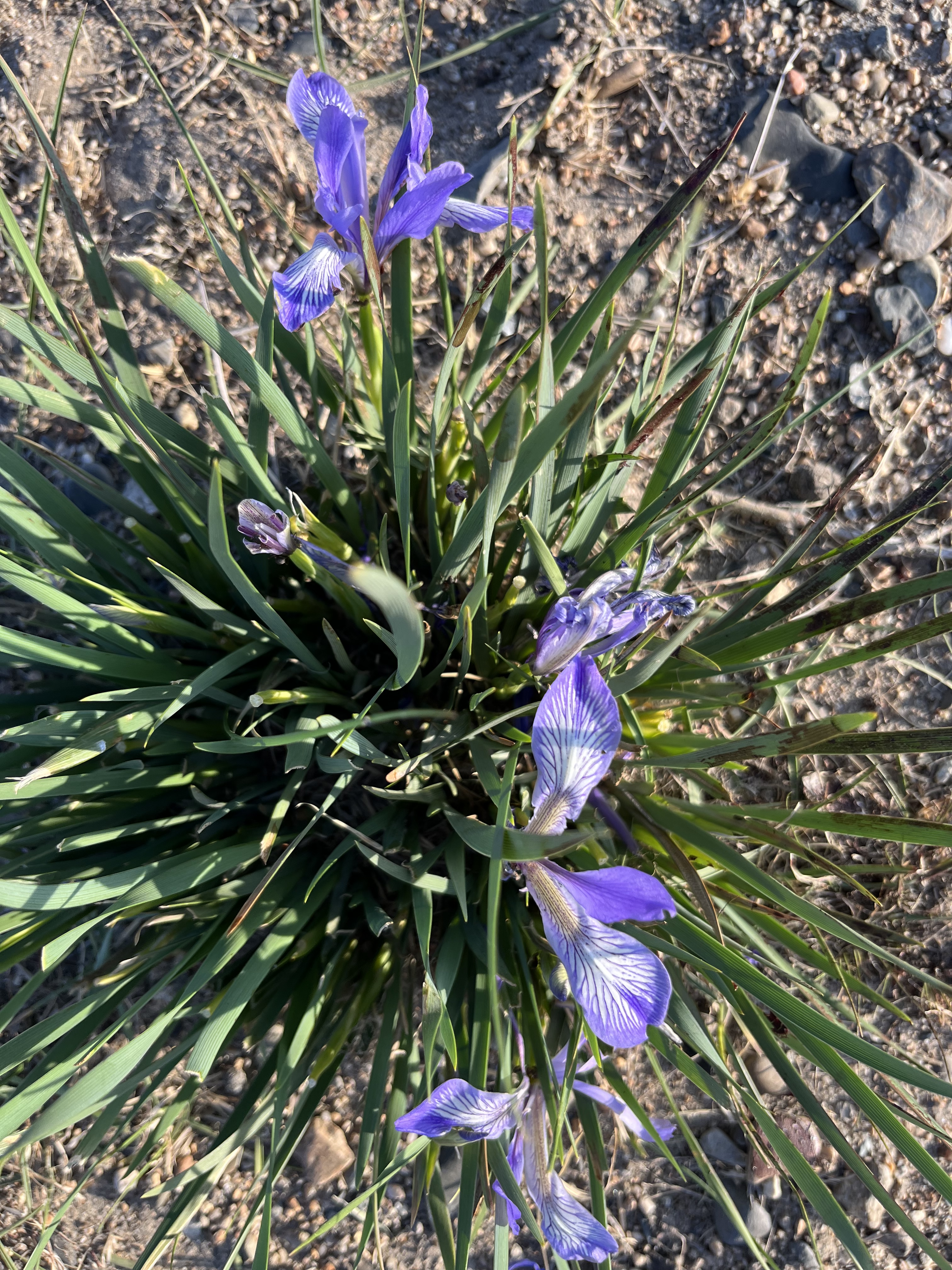
After the 40 km break we were all set to finish another 10 before lunch…but there were the lunch buses up ahead after only a couple of km. It turns out there was a police blockade up ahead. The region was having an outbreak of some kind of livestock disease. We would have to lunch quickly and move on. We ended up having to take a huge detour to avoid the affected area; we would have been required to quarantine there for 31 days had we not! The landscape got greener for a while, and then we approached a salt lake. The wind blew small cyclones of white salt high into the air. At 62 km we took a break in a huge salt pan that spread out beyond the lake. I was amazed to see those same small purple irises, fields of them, growing in the salty soil. We were very tired already and weren’t totally sure how much we had left; we were entering an area where there were some agricultural projects and large fences had been erected that we’d have to skirt. Two of the riders moved into the support truck with the doctor.


We rode another 20 km, along long fences, then through fields dotted thickly with wild rhubarb. We could see the buses and the camp site for miles, but had to weave between fence lines.
We arrived in camp. We had ridden 82 km, over 51 miles. It was not a day of long gallops, but rather one of lots and lots of trotting. Trotting is clearly the preferred gait, and a steady rig is the most efficient of all; you can cover 10 km an hour at that gait, and you can just sit in the saddle and space out while you do it, so it’s efficient for the rider as well.
I bathed from a jug of water. Dinner was rice and beet salad and meatballs of mutton with a sauce. The motorcycle guys had kindly picked up several extra jugs of beer. We drank lots of water and rehydration salts, and lots of beer. Everyone was in a good mood, especially after Julie said that the herdman had decided we’d have a shorter ride today (40-45 km), and finish tomorrow (the final day of the ride) with the 20-something we’ll need to reach 700 km.
As dusk fell, two small children rode past bareback, herding a big flock of sheep to a nearby well. They were chatting and giggling as the passed. I waved and they waved back. It was a good moment. I’m not so silly as to think that nomadic life is easy, but it is something to be preserved by reducing overgrazing for cashmere and by rich city people who have large herds for status, and by providing medicine and education to rural areas. However you slice it, I’d rather be one of those giggling kids than one of the trashpicker kids in the Ger District.
I had a long conversation with Soyolbold at the dinner table. He’s an interesting guy, very smart and very interested in both wildlife conversation and the preservation of traditional Mongolian nomadic life. (And in motorcycles.) I could see him becoming an important and effective figure in fighting for these things.
A quick story that I left out in my last entry: as we rode into camp the day before yesterday, we passed a woman with a big flock of several hundred sheep at well. It was very hot and she was trying to make sure all of her sheep were watered. We arrived in camp with Bagi in the lead. While the riders dismounted, Bagi turned to one of the men. Translated later by Julie, he said, “Didn’t you see that woman all by herself at the well, struggling to give water to all of her sheep in this heat? You guys all went right past her! Go back there and help her.” And the man did. Julie has told other stories of stopping to help people set up their ger as they ride by.
End of Day 11
Have I mentioned that the Prius is an amazing car? They are all over the Mongolian steppes, in all sorts of places you can’t imagine them going. They traverse rivers, climb rocky slopes, and are good for herding sheep. If you are looking for a rugged car for off road trekking, buy a Prius.
Thursday, June 15: Start of Day 12, about Day 11
I had planned on writing last night, but then there was a big surprise celebration for more or less having finished our ride. We were up late for the party, and there was no writing.
The day was pretty amazing. As I said, we had earned a late start. We slept late, breakfasted on toasted bread and omelette with Canadian bacon bits (nothing overly creative to report there!), and started the ride at 10 am. We planned to do about 48 km.
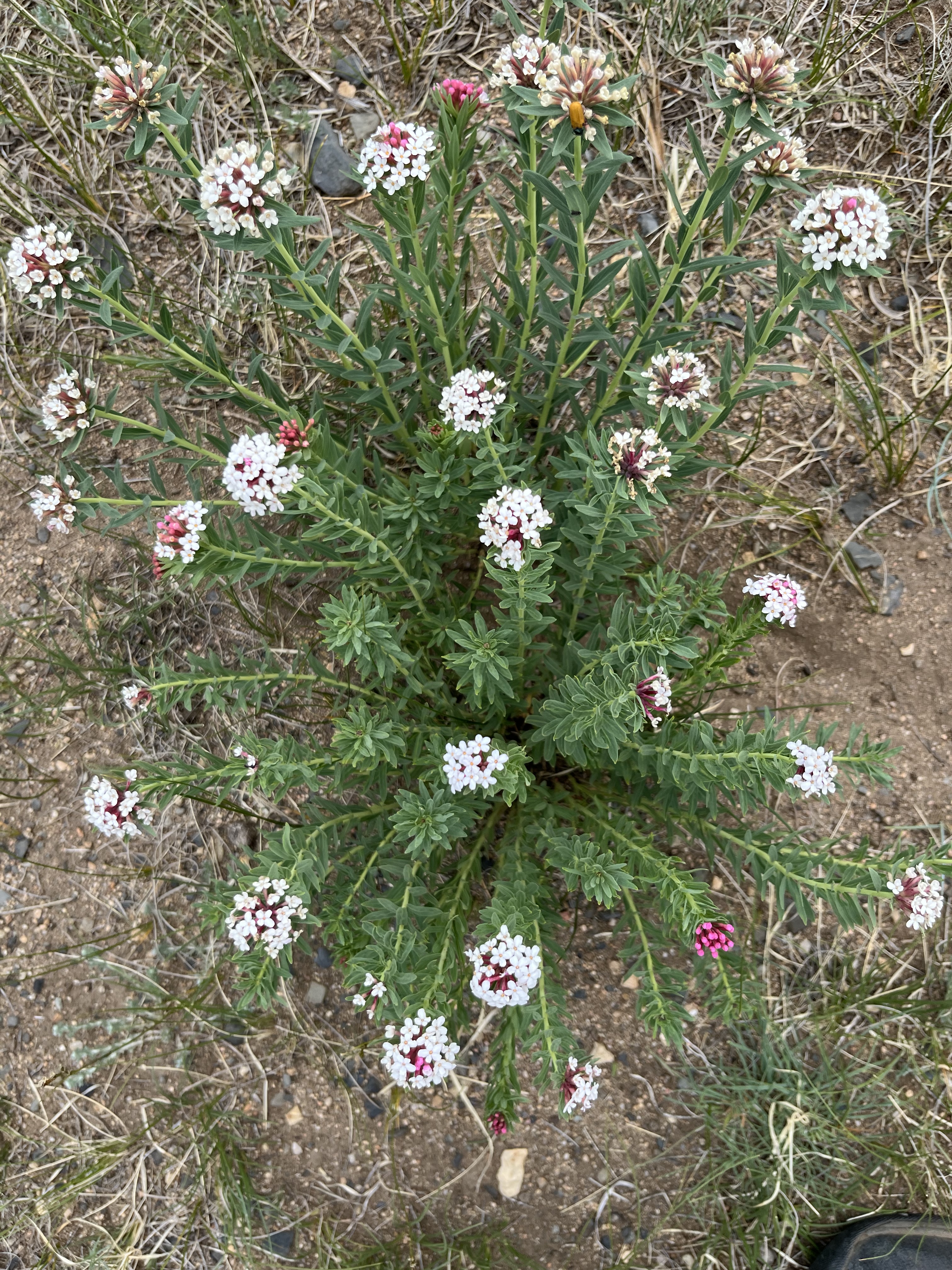
I was again riding the race horse, whom we call Floppy Ears. He is big and dark brown and just fabulous. We did 12 km, then breaked, then another 10, after we which rested in an incredibly beautiful, wide, long valley. This valley is very important in Mongolian history, as it was for centuries (millenia?) the meeting place of clans where the khans were named. Small white composite flowers with purple centers dotted the valley floor. We lay on our backs at the break and watched the clouds moving over us.

We rode onward. At one point Bagi, who was leading, called his son Saigna to the front. I’m pretty sure he said “Take them for a big gallop.” Tanya and I were both riding horses who were really wanting to go, and we’d been holding them back next to Bagi. Saigna zoomed off and Tanya and I followed, then rode to each of his sides…and then off we went! It was the most incredible (and fairly scary) ride I have ever had. It started at a gallop, and then it switched into a higher gear, and then Saigna sped up, and it turned out there was another gear I didn’t know existed. We were flying, absolutely flying, and I was hold the horse back. He had more gears. He wanted to go faster! I admit it, I was afraid of coming off at that speed, and I could see some gravel up ahead. We slowed. It was amazing.
We arrived at a tourist site (the first such thing I’ve seen) that has a life-size model of a Ghengis Khan fortress and an old style of ger. The crew had planned a whole performance for us that was so sweet. Apparently Mongolia is the birthplace of the passport; travelers carried a small metal tablet that had their name stamped on it in the ancient Mongolian script. Saraa had translated each of our first names into the script and Tolman, one of the herdsman, had carved our names into small pieces of wood shaped like the old passports. We rode through a gate at which Brya (who is the crew comedian and one the drivers, but who also is reputably one of the greatest horseman ever) stood dressed in the costume of one of Ghengis Khan’s soldiers and shouted out some kind of greeting or warning to us. We had to show our passports to ride through. On the other side of the gate, Dolma greeted us, also dressed in an ancient traditional costume. It was all very sweet. We rode through the fortress and had a look, then headed to the buses for lunch (a hearty chicken soup).
Although the day’s ride was short, the afternoon portion was still long. We entered beautiful rolling hills that looked like swaths of green velvet. We rode over hill after hill. Floppy Ears chugged along uncomplainingly, ready to run again if asked. We arrived in camp in late afternoon. Another 52 km (32 miles), with 24 km left to do today to complete our 700.
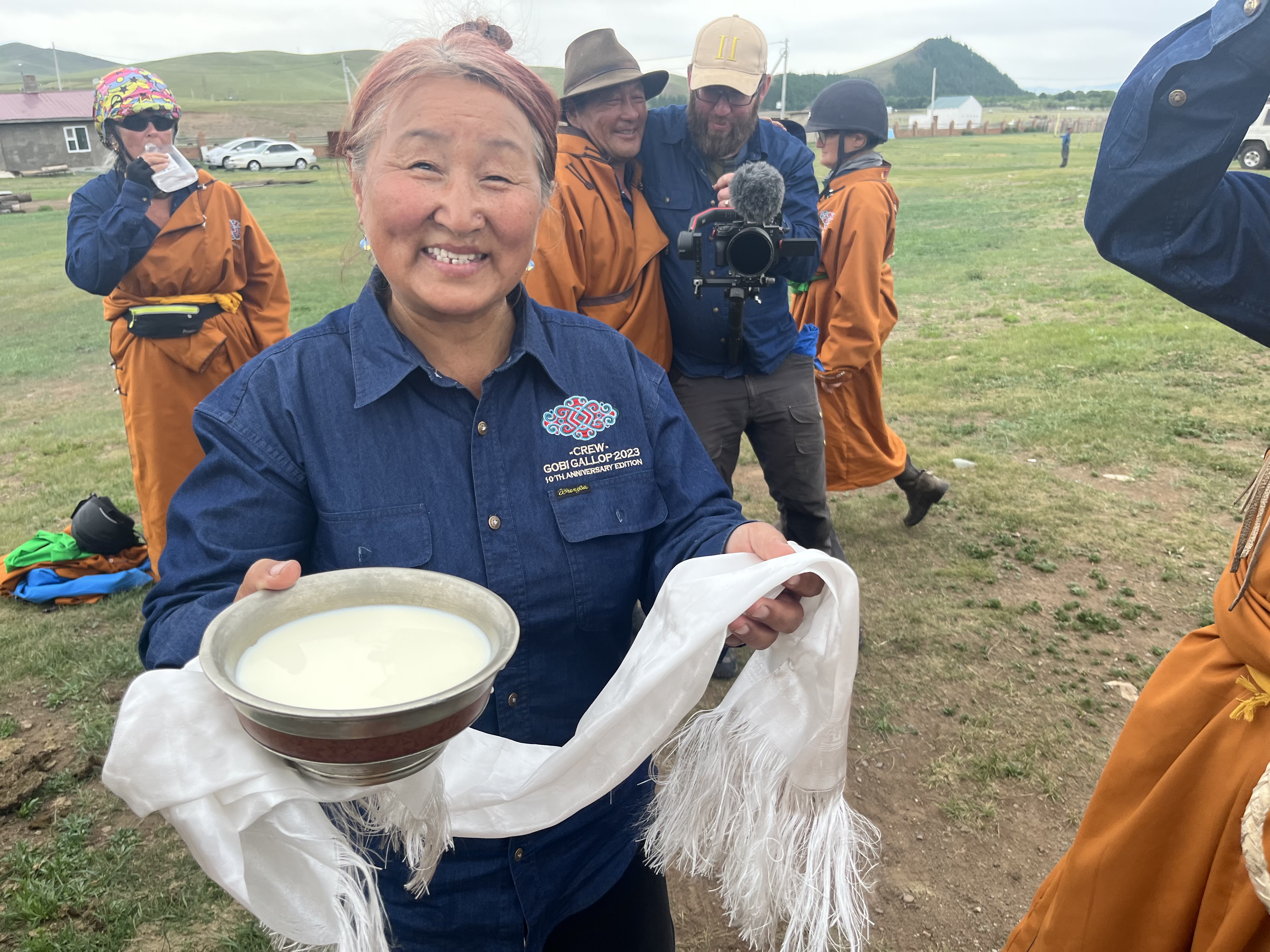
I sponged off, attended to my chafe, and put on warm clothes. It had grown cold again. We drank beer and wine. Sweet Dolma had planned a dance performance; we adjusted our camp chairs while Saigna set up her music. She has been taking traditional dance classes. She performed dances to two “popified” traditional songs and then a third to music performed on a horsehead fiddle. She was excellent. Then Saraa appeared with a bottle of vodka and a shot glass. It was time for the circle of toasts again. Zola poured and translated. There were heartfelt thanks from both the Mongolians and the visitors. Khlauga sang a beautiful song. It was a wonderful party. I was a little emotional when I gave my toast, in which I said that they – Bagi, Saigna, Saraa, Khlauga, Tolman, and the others – gave me hope for the world. Dolma hugged me and one of the kitchen ladies held my hand. These are all truly kind people. I’m so glad for this creative and amazing collaboration between Julie’s foundation and these herdsman, and I think it is clear that it is helping keep herders in the countryside and out of the Ger District and the dump. It’s the kind of small success that gives you hope.
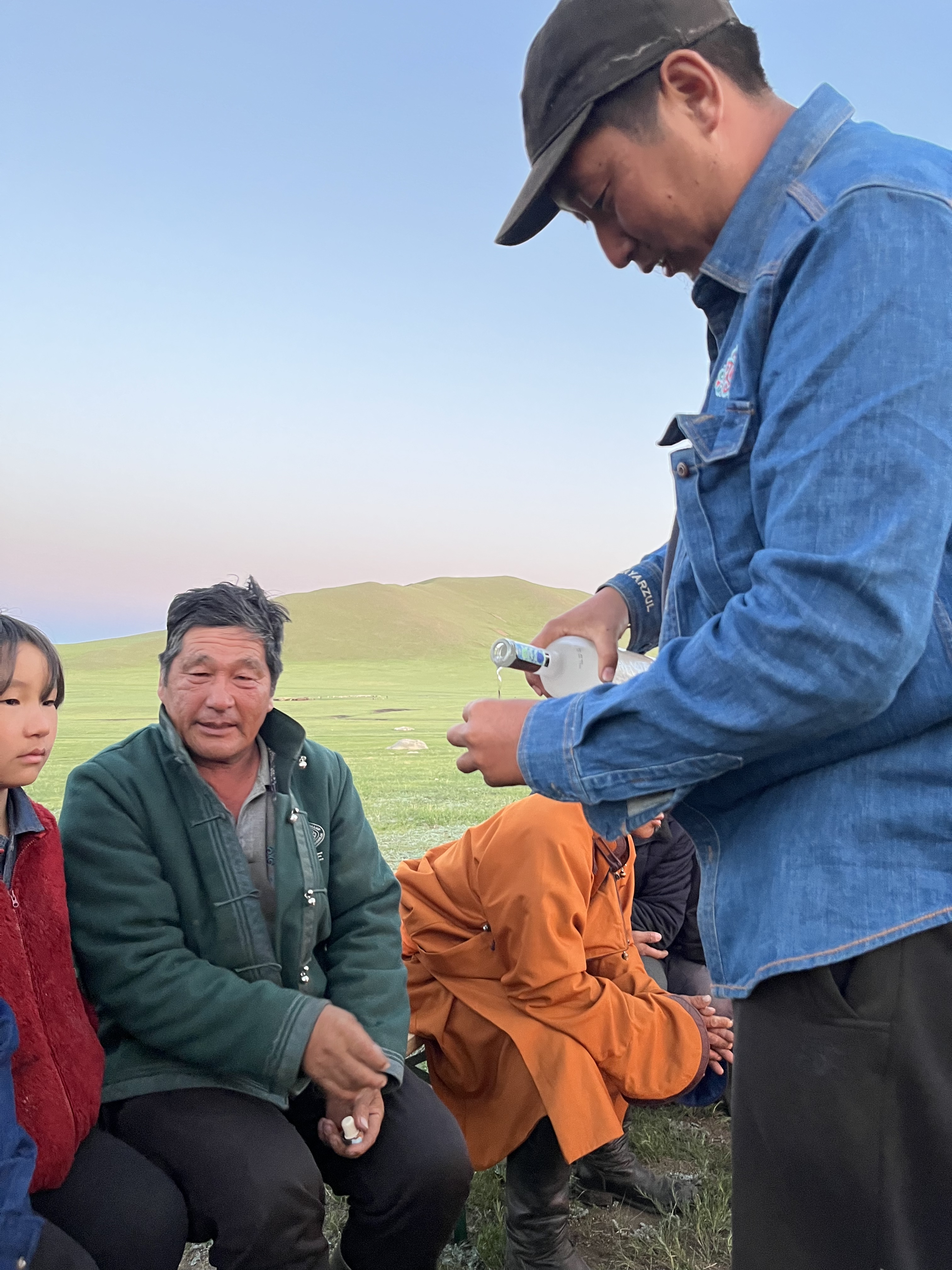
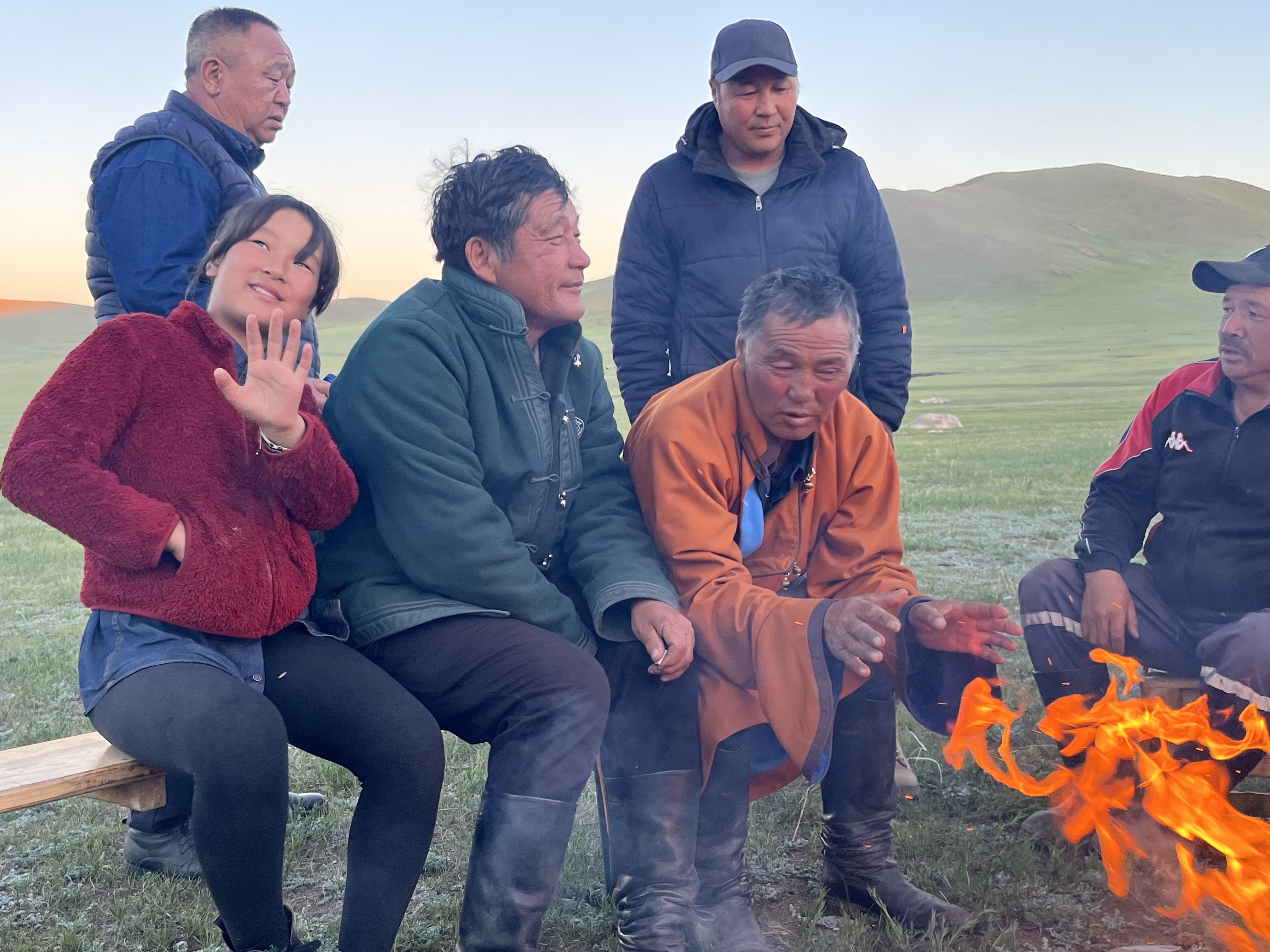
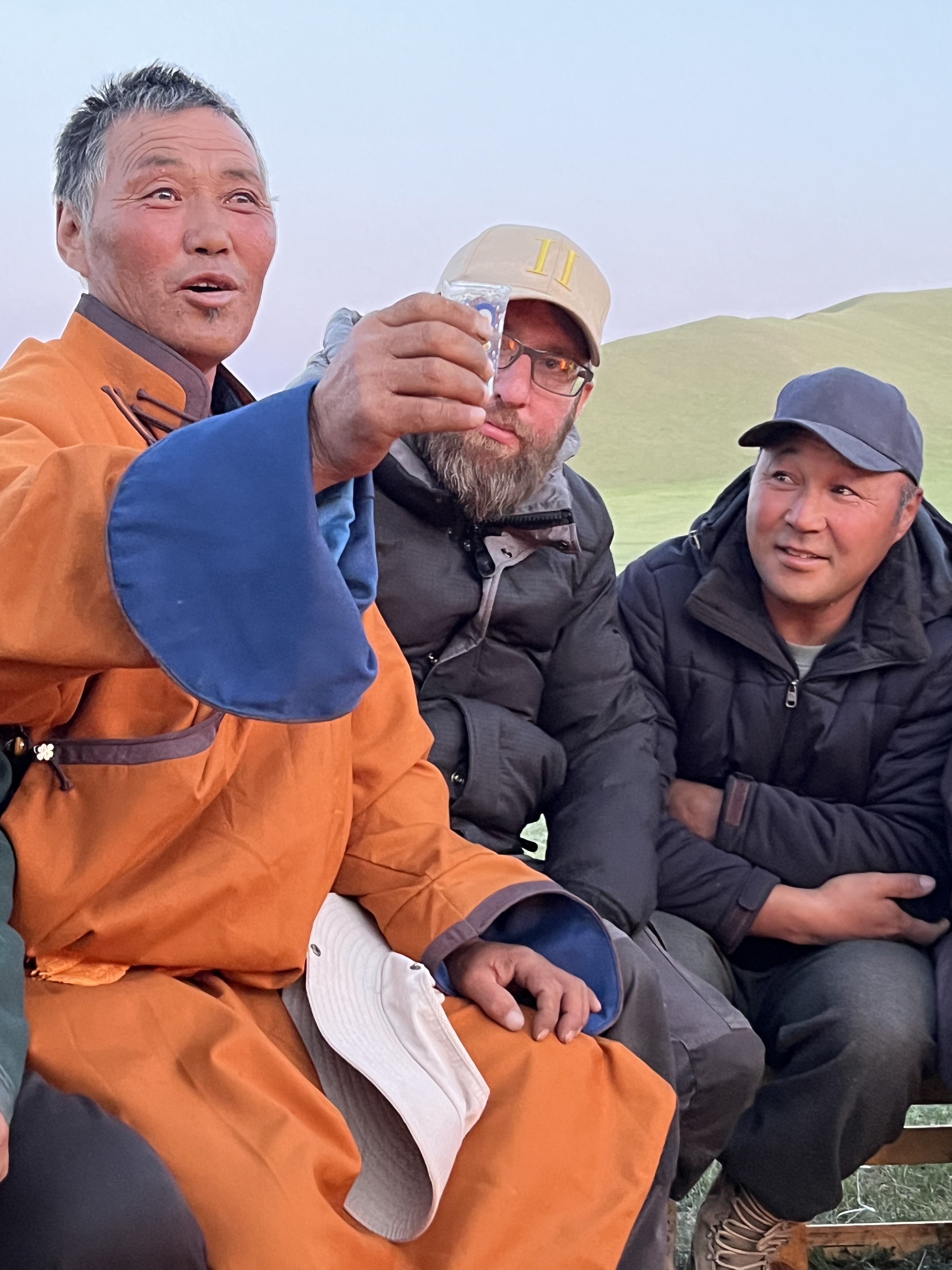
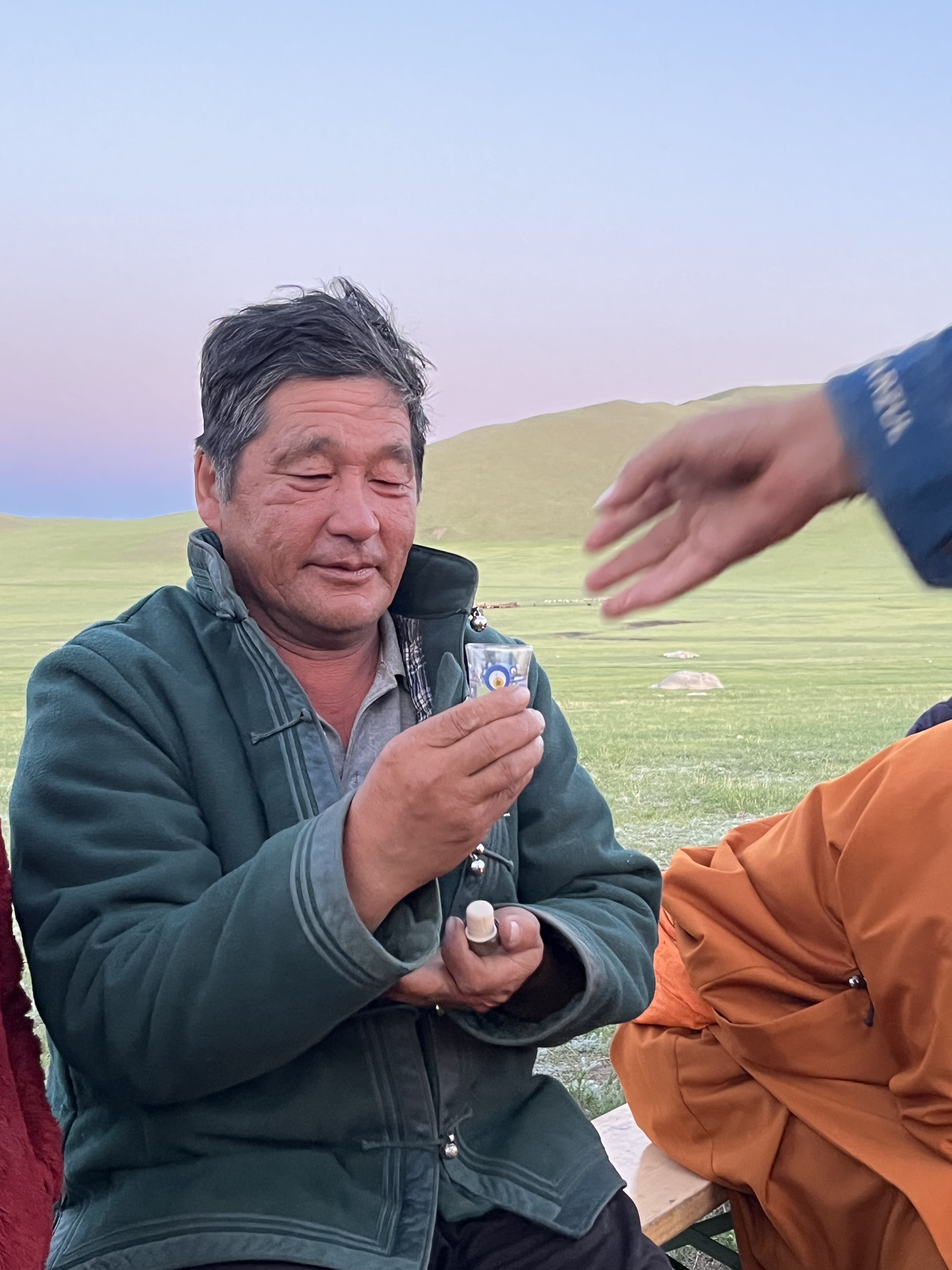
It was funny – neither Saigna nor Zola toasted and drank vodka. Although they are both in their 20’s, they were with their parents, so they are children. Children do not drink with their parents.
It’s time to prep for the final day of riding, in which we’ll arrive at Saraa and Bagi’s home and horse camp. As incredibly hard as this has been, I don’t think any of us want it to end. I’m going to miss these folks.
8:23 am
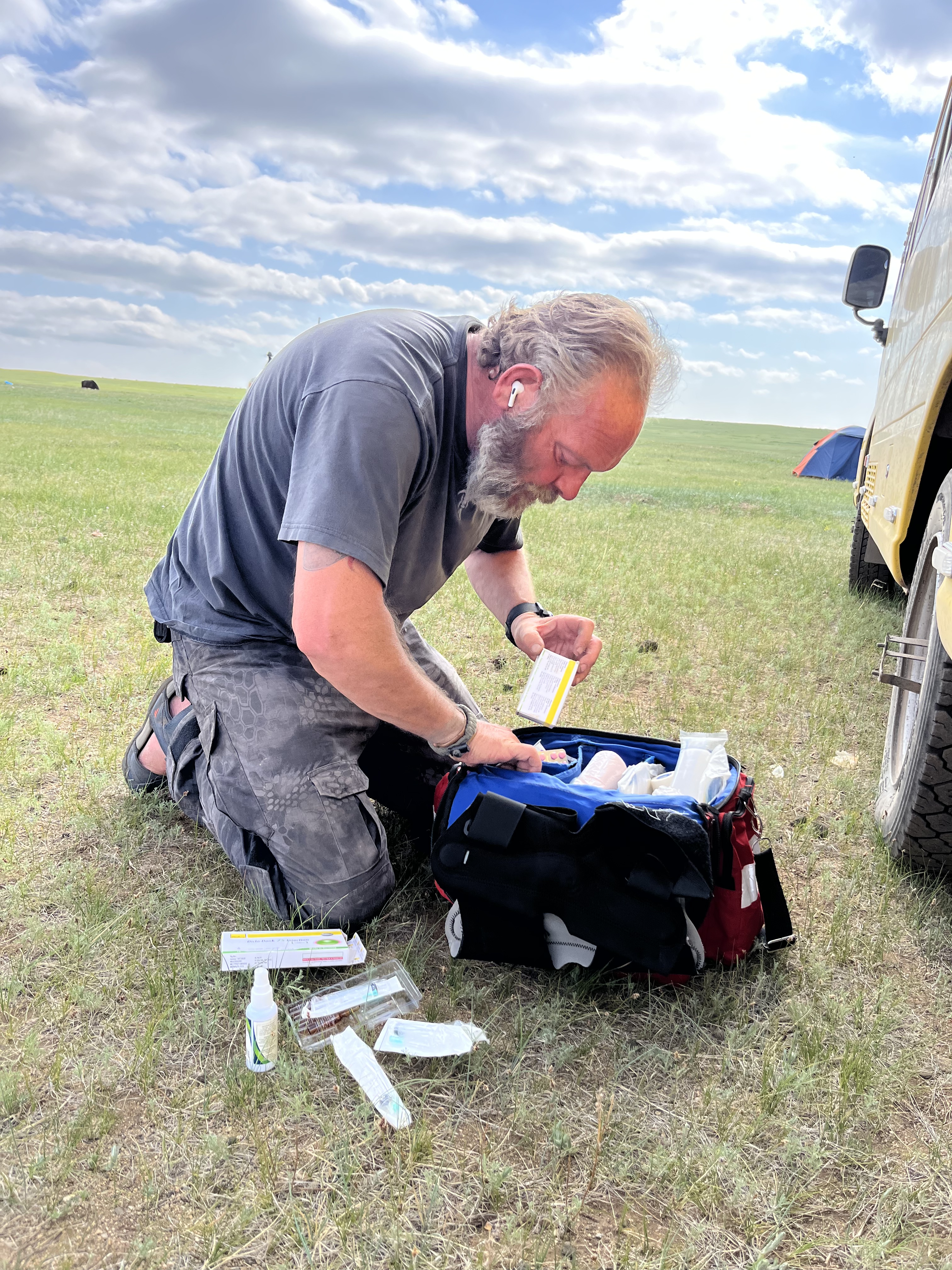
There’s still time to write a bit. It looks like it will be a late departure.The herdsmen are concerned about some of the new vegetation the horses are eating in this valley and determined, through their millenium-old calculus, that several of the horses should be bled. We watched from the breakfast table. I think I might have found this upsetting a few weeks go. I did not today. I absolutely trust that these guys know what they are doing and that they would not harm their horses.
At the table, there was discussion over who would be given the very last antiinflammatory injection in the medical bag. Dr Suke went back to the city for work a couple of days ago (he is the doctor for a mining company), leaving Tom the Irish biker in charge of medical care. Tom was a medic in Afghanistan. Be careful if you ask Tom for a bandaid for your finger, we joke, he’ll decide to amputate your arm right here in the field. Maybe that’s only funny after you’ve been hanging out with the guy. (He’s quite a character. I can only understand 50% of what he says in his Irish brogue. He is sunburnt and has wild hair. He’s married to a South African art teacher. They’ve been in Mongolia for many years and he loves it. She is soon starting a job in Singapore and they will move in a few weeks. He is clearly heartbroken to leave.) It was determined that Tanya, who has been riding for a week with very painful spasms in her back, will be the beneficiary of the shot.

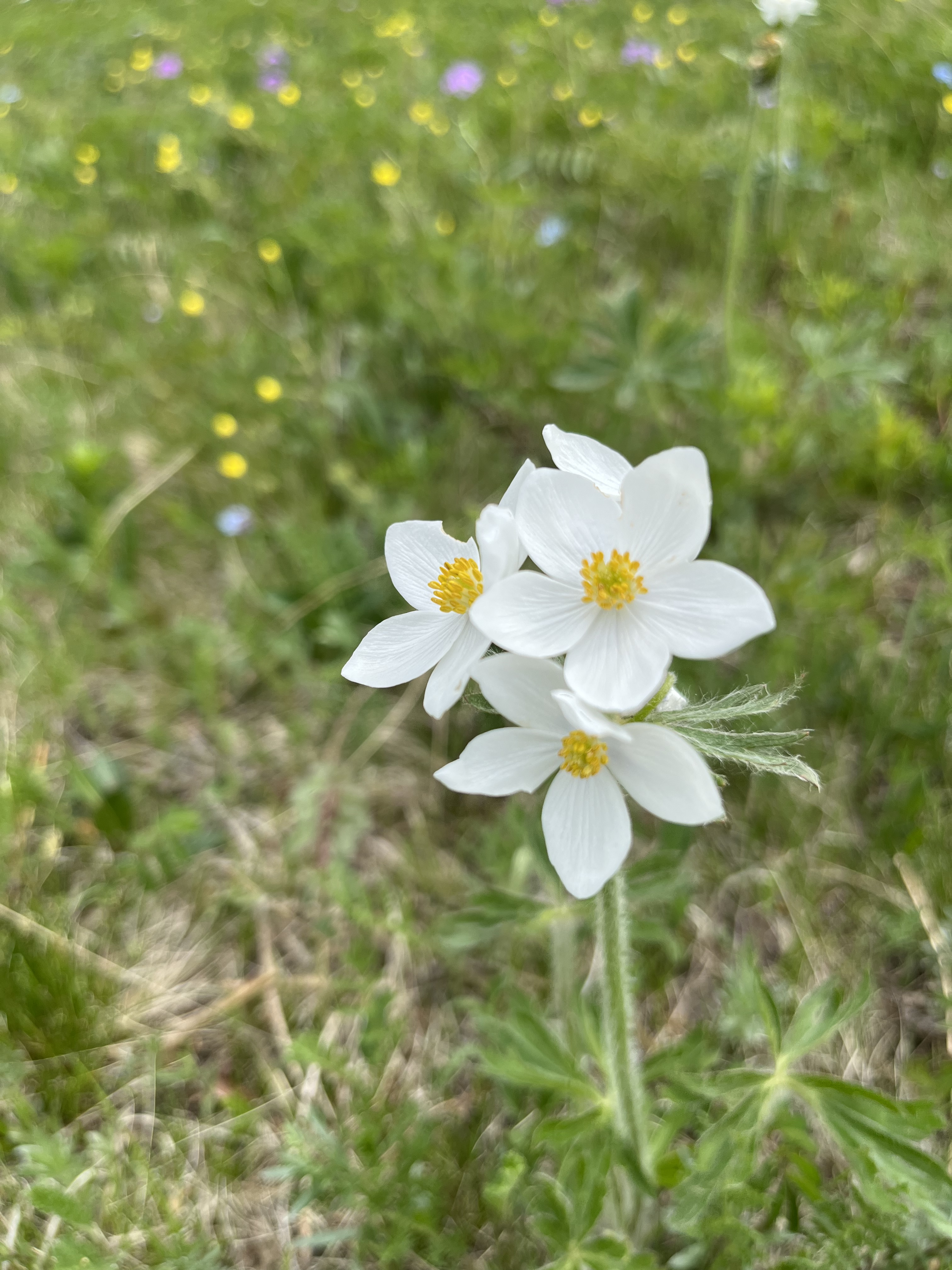
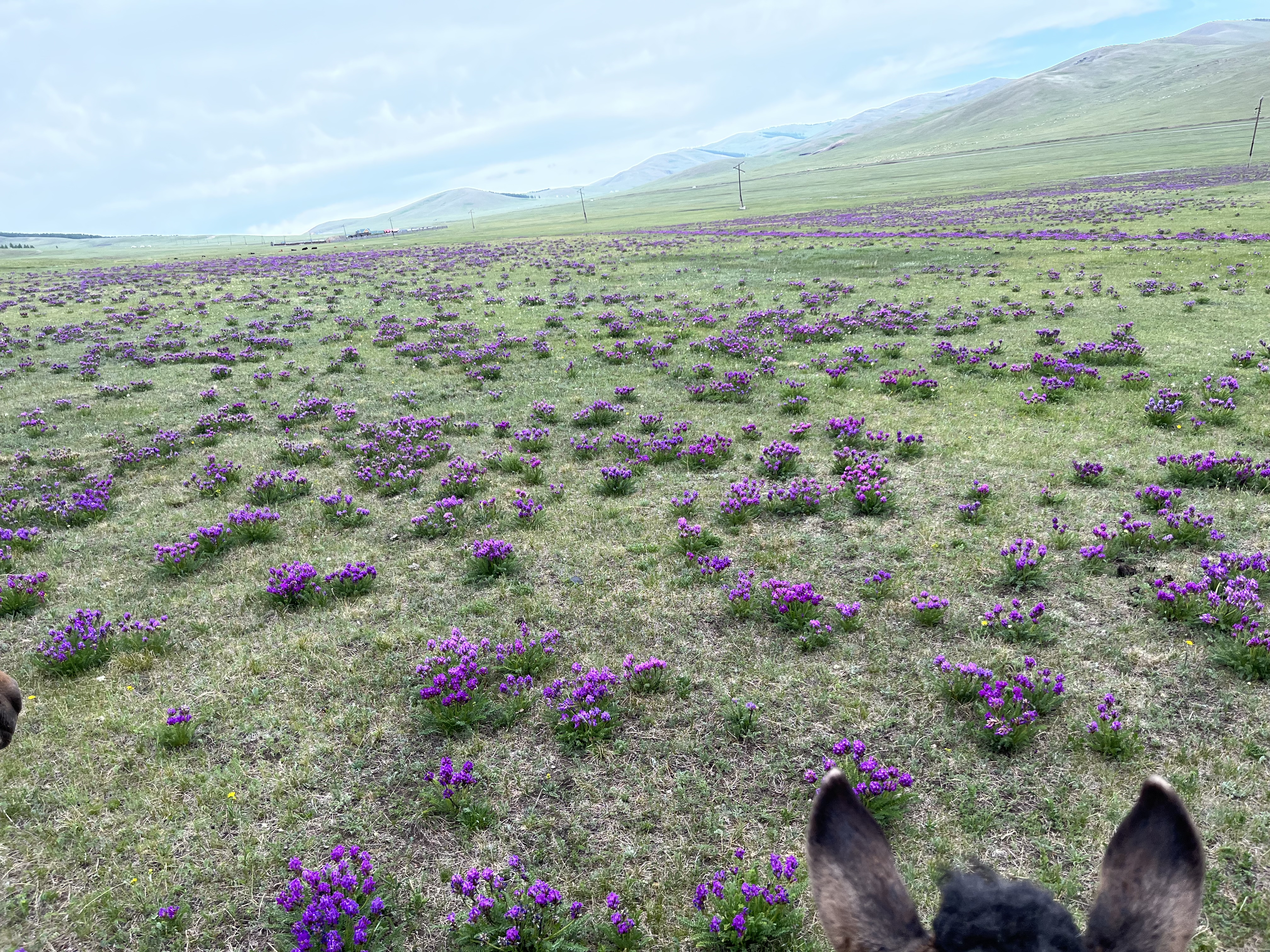
We departed after a breakfast of french toast and pickles, and a photo shoot of each of us on horseback sans helmet. You can’t identify any of us with our helmets and scarves on, and we requested photos with our faces showing so we can prove we’ve really been here. We left the velvety green hills and rode through a carpet of sweet-smelling purple flowers. We had a break next to a larch forest. (It was so nice to start seeing trees again yesterday after five or so days with not a one, but for the few cottonwoods planted in one town we passed). The view in all directions was fabulous at this rest spot, and the wildflowers growing under the larches were gorgeous. As we rode on after the rest, we passed through the larch forest, and the number of different wildflowers grew more and more – tall pretty white ones, orange ones that looked a little like poppies but with more petals, little yellow ones. The forest was beautiful. Bagi was in the lead, Khlauga mixed in among us. He broke out in a beautiful song and Bagi chimed in from way up ahead. They were laughing and enjoying themselves.

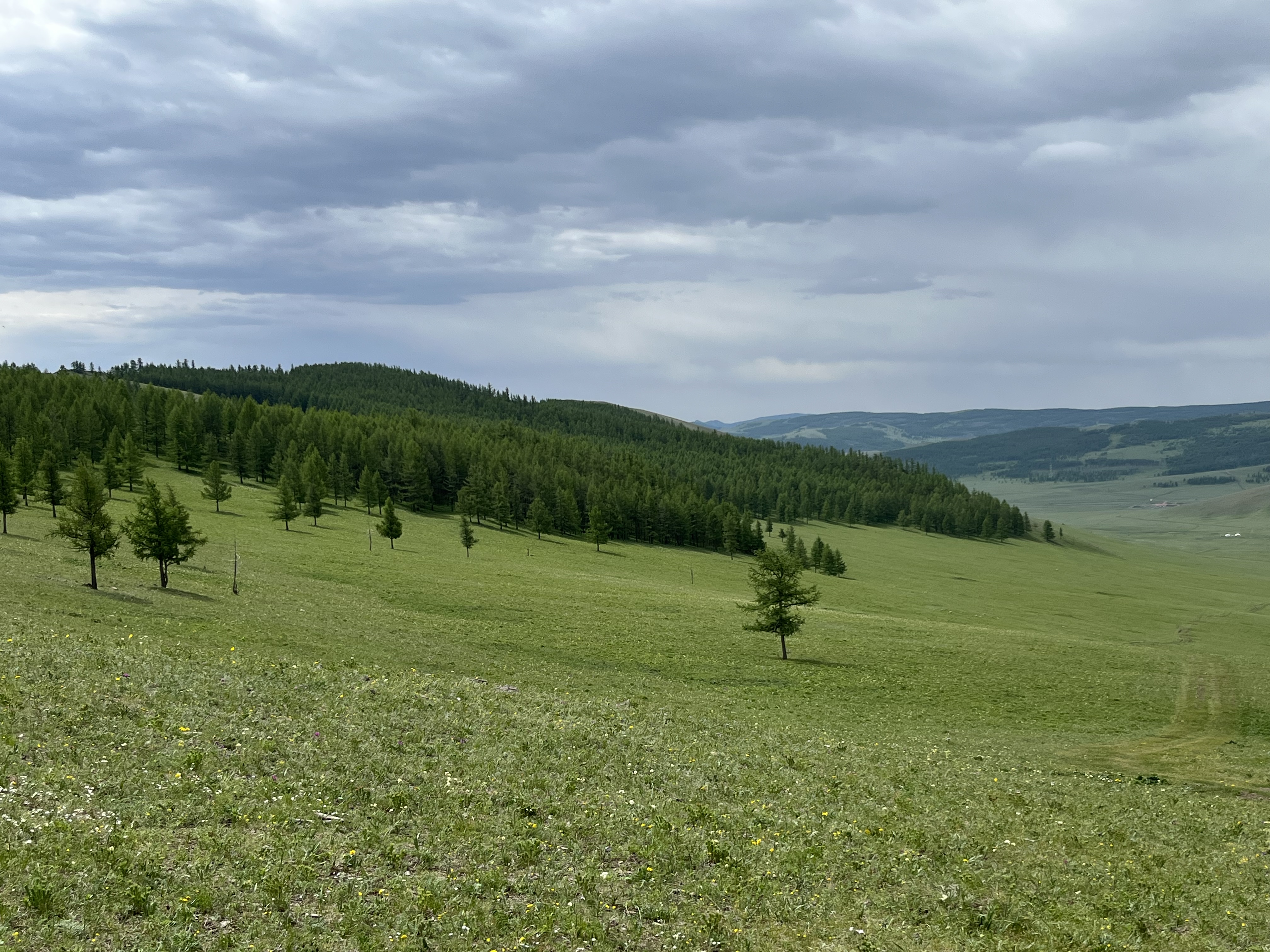
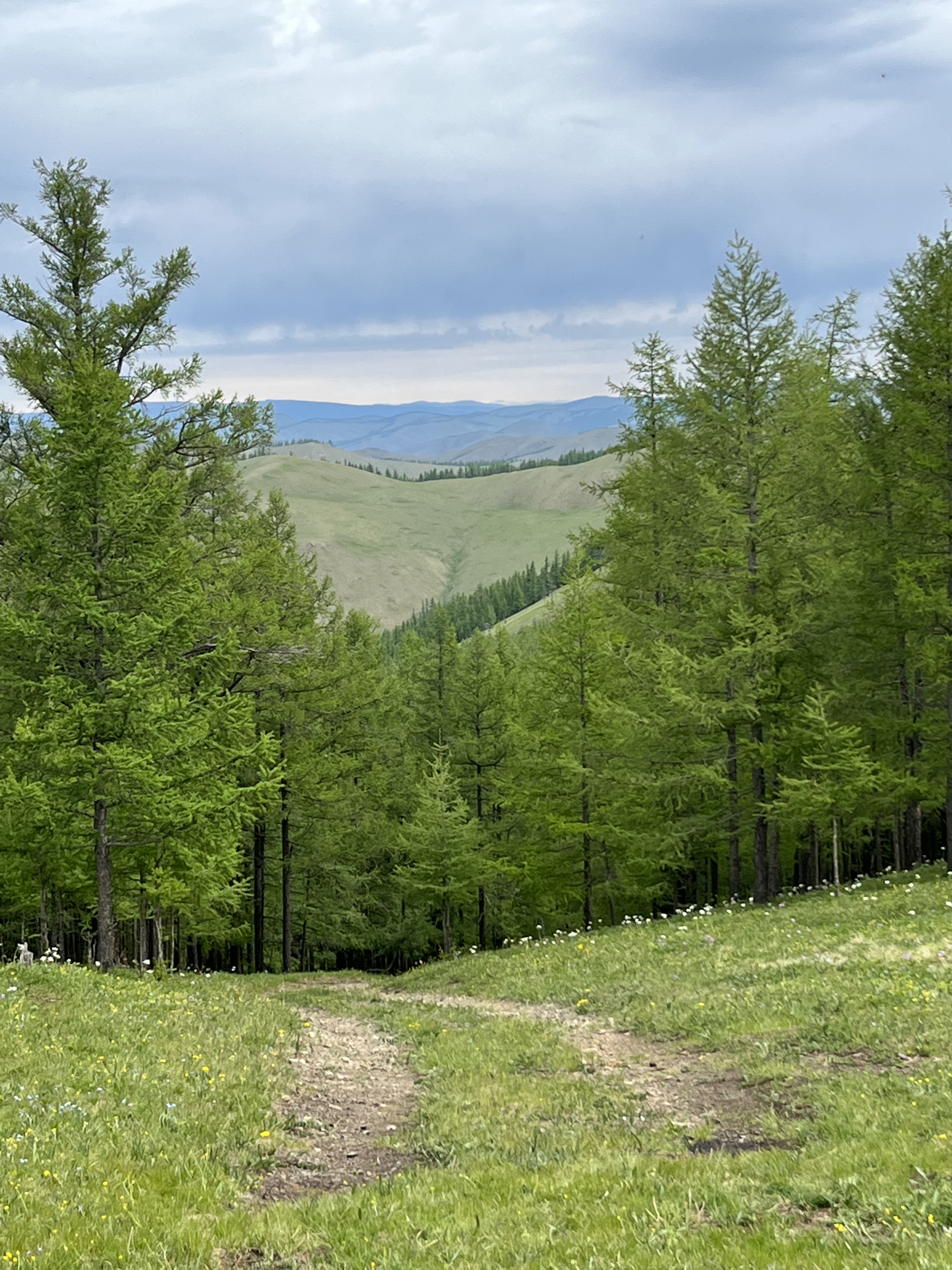

We emerged from the forest and passed an ugly coal mine and a small settlement. We again entered rolling hills and had a gallop (our last one) straight up the steep side of one. I was on handsome Fabio, who flagged a bit and the end, but that was okay because nothing will ever beat yesterday’s gallop on Floppy Ears. At the very top of that hill we hit 700 km, our goal.
And two plus km later, we were at Saraa and Bagi’s home and horse camp. A feast awaited us, with plates of cheeses and preserved meats, nuts and dried fruits, meat dumplings, heaping platters of cabbage and carrot salad. We ate and drank beer and wine. We were shown to our gers – I am sharing a spacious one with Tanya and Cele, the Australian rider. We took hot showers, one by one, in a bathhouse. I pried the dirt out from under my fingernails and bandaged my bum. The riders with the worst back pain (Charlotte and Tanya) are getting massages to work out the spasms. I am wrapping up my journal about the riding part of our trip.
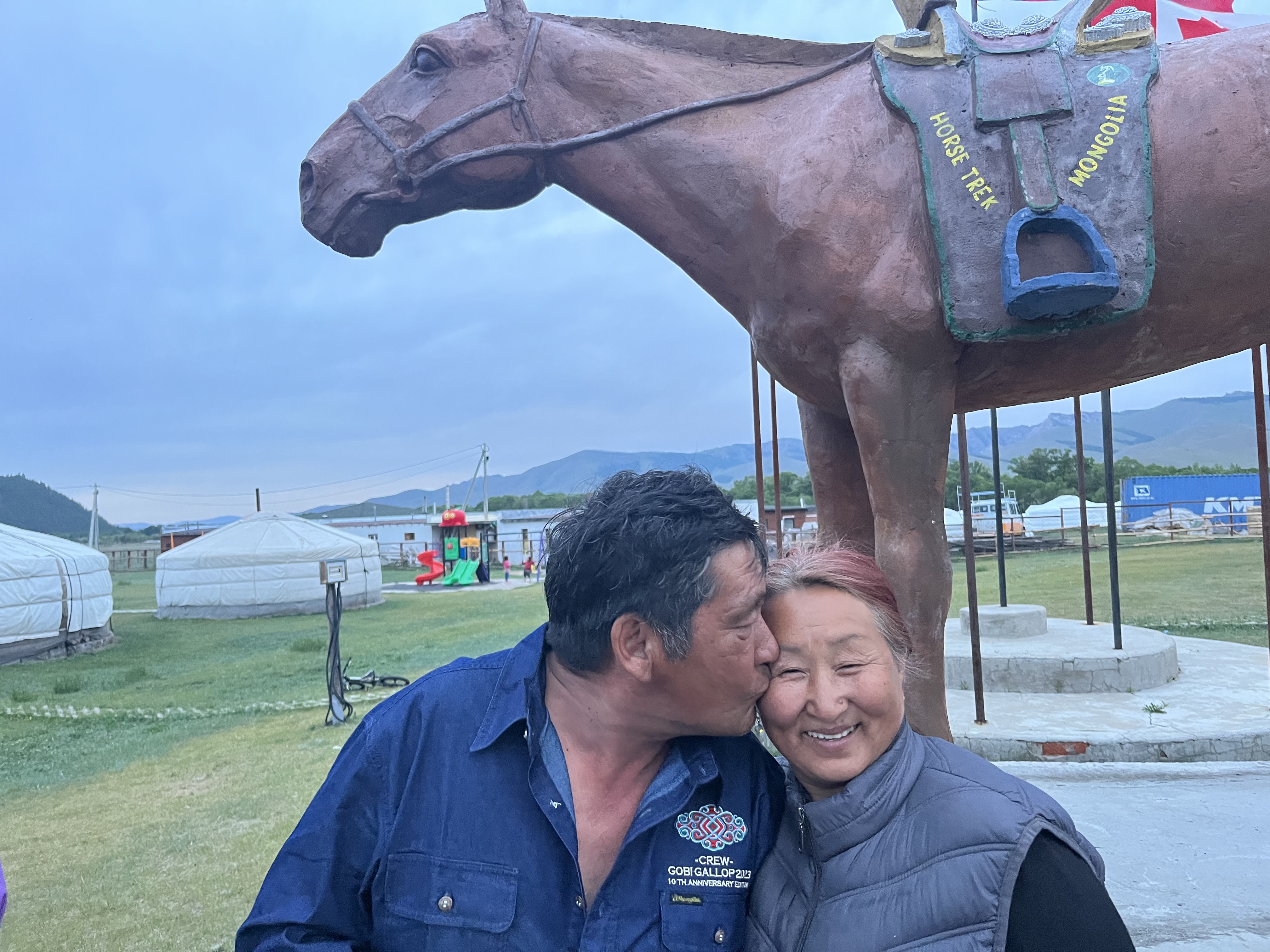
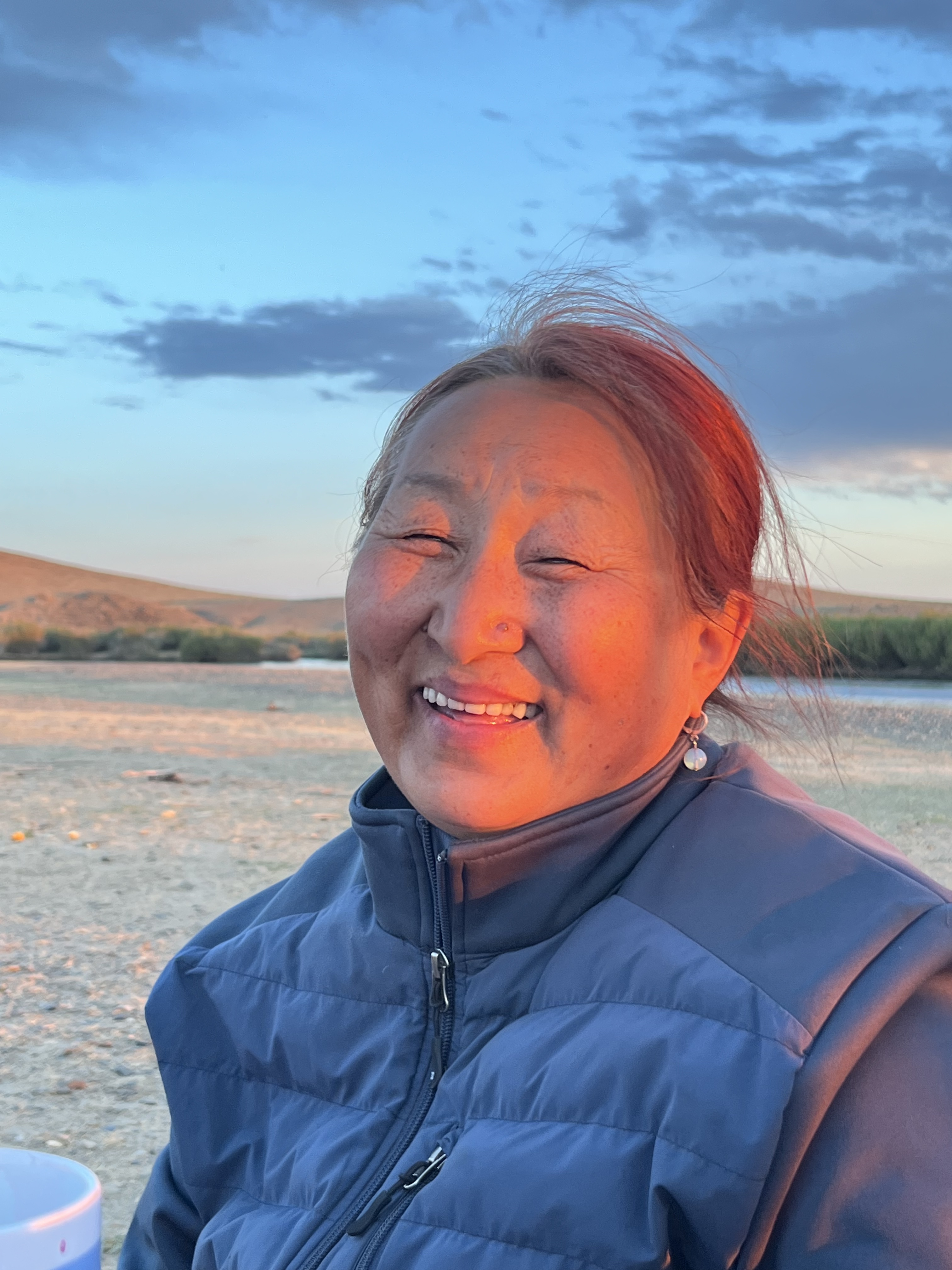
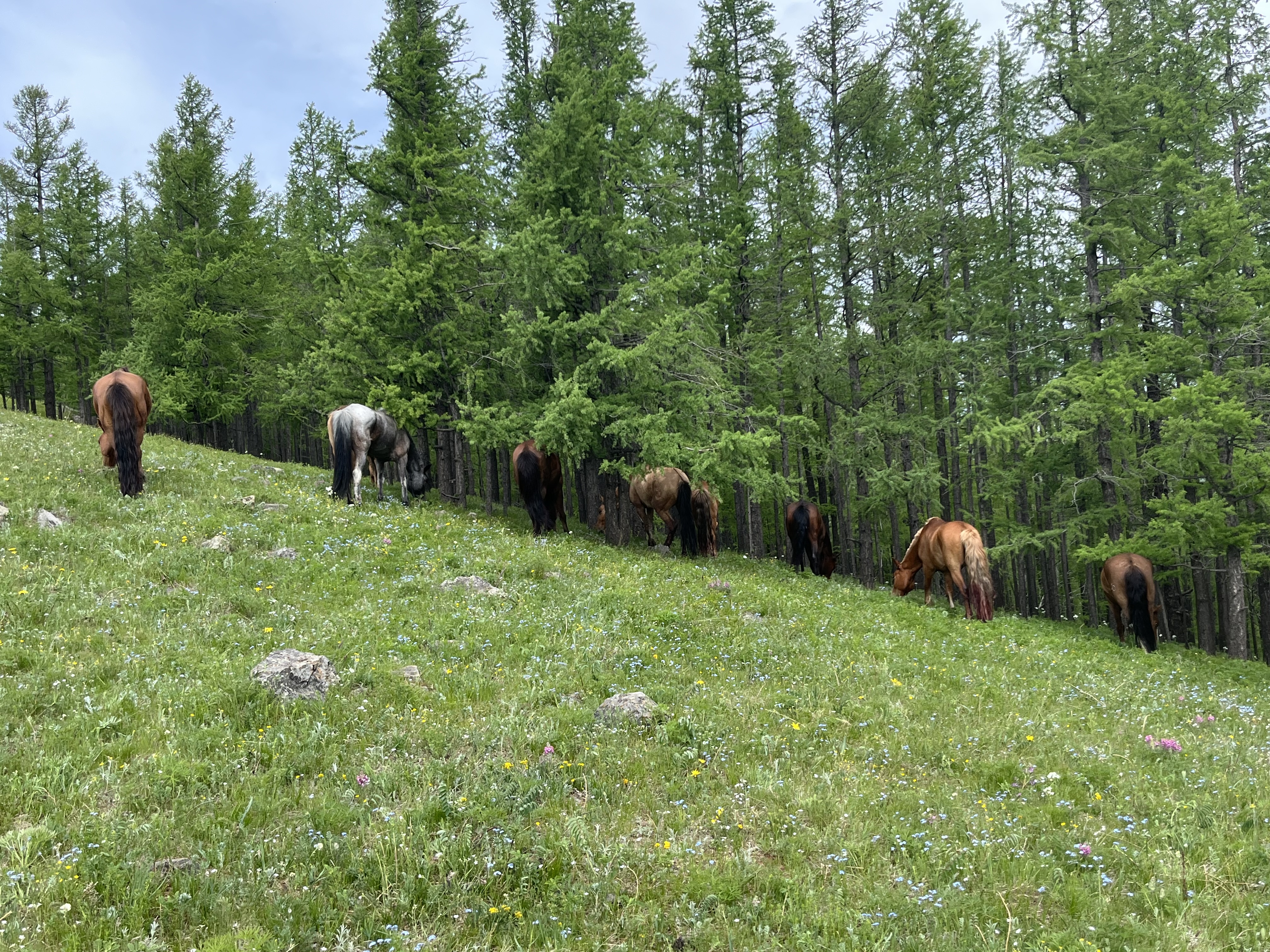
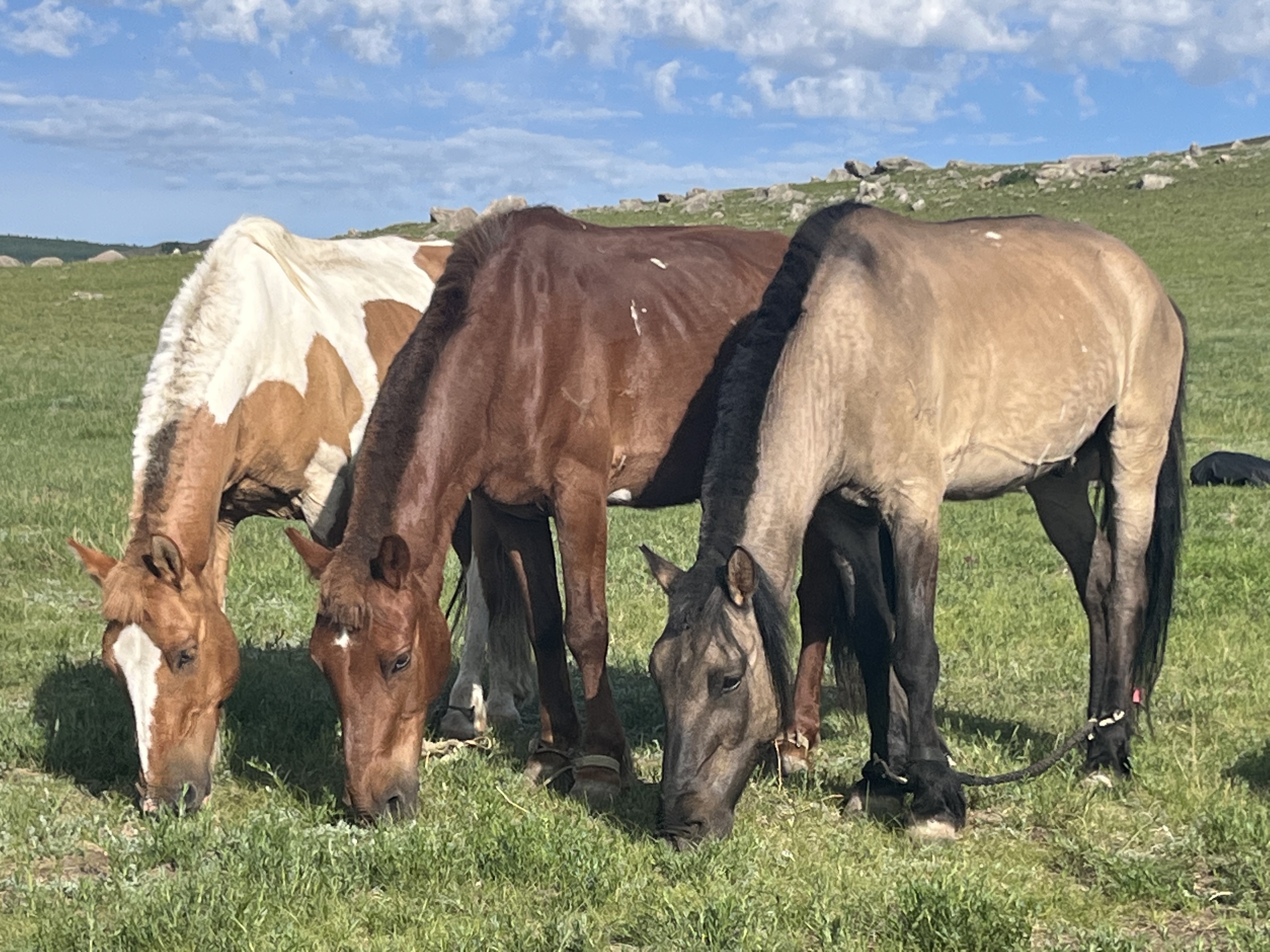
I feel a bit sad that it’s over, though of course I’m relieved that my body will not undergo the physical strain it’s been under for 12 days. I was happy to see our horses grazing just outside the gers. I’ll miss them, and I’ll miss Khlauga and Dolma, Bagi and Saigna, Zola and Soyolbold, the kitchen ladies. These are good people who have taken good care of me for almost two weeks. Sigh.
Tomorrow we will be driven back to UlanBataar, with our expedition boxes filled with heaps of very dirty laundry. My deel has chicken soup and red wine on it, and has been laid down on the ground on top of dried manure for a lunchtime nap every day of the ride. It tells a whole story!
We will be taken to the five star UB Best Western for spas and massages and pampering. I think we’ll have a group dinner tomorrow night, and then on Saturday night is the fancy gala. Looking forward to seeing what kind of gown the seamstresses in the Ger District have concocted for me.
 The Bare Bones Mommy